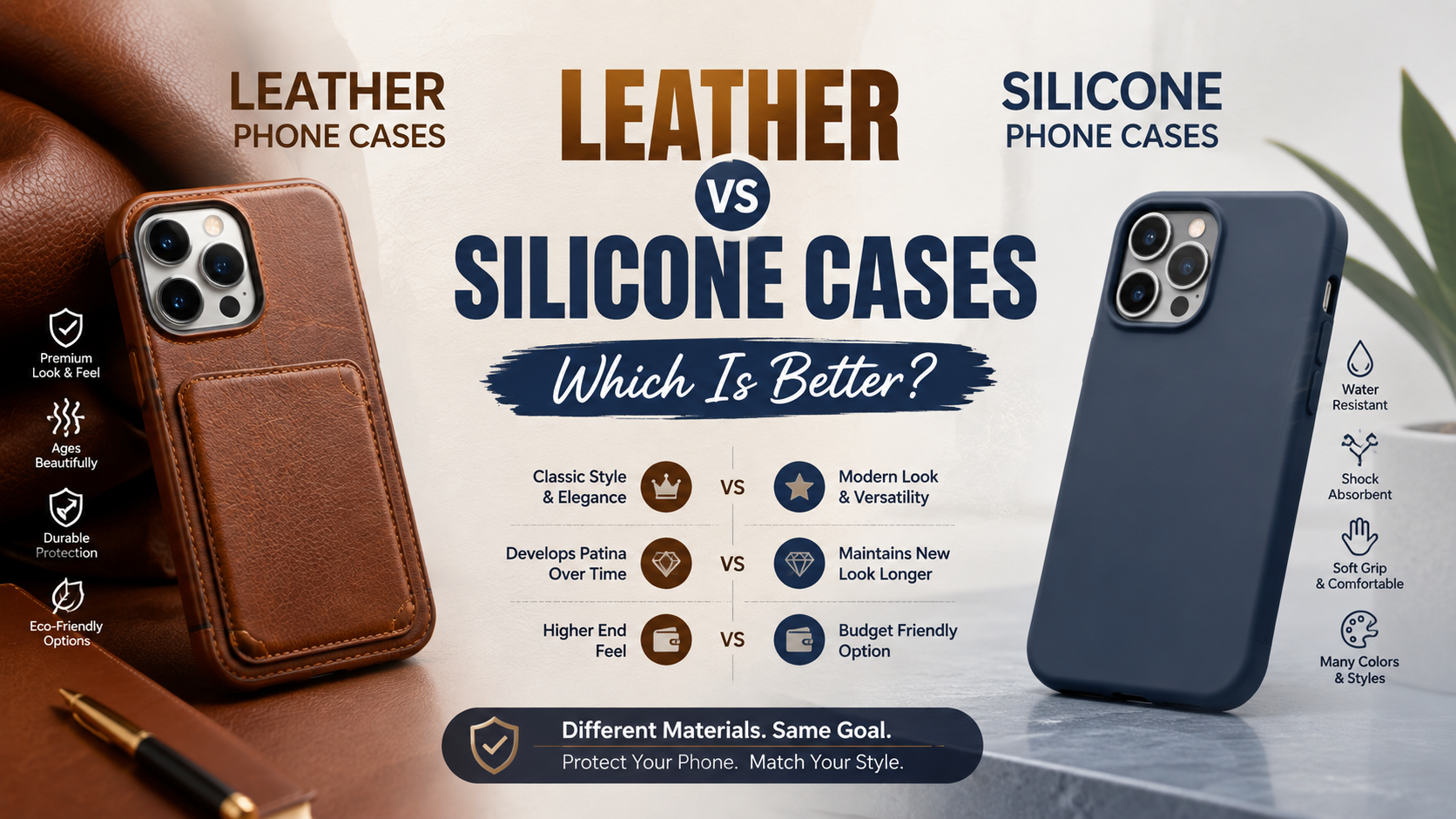
Choosing a phone case often comes down to two popular materials: leather and silicone. Both protect your phone from everyday wear while giving it a distinct look and feel. However, they differ significantly in grip, durability, maintenance, appearance, weight, and how they age.
A leather phone case is often chosen for its premium appearance and ability to develop character over time. Silicone cases focus more on softness, grip, flexibility, and straightforward everyday use. Neither material is automatically the right choice for everyone. The better option depends on how you use your phone and what you value most in a case.
This guide compares leather phone cases vs silicone cases to help you understand their key differences and choose the right material.
What Is a Leather Phone Case?
A leather phone case uses natural or synthetic leather as its main exterior material. Genuine leather cases are typically made using animal hide that has been processed and finished for durability. Some cases combine a leather exterior with a rigid internal shell to hold and protect the phone.
One distinctive feature of genuine leather is how it ages. Regular handling can gradually change its color and texture, creating a patina. Scratches, oils from your hands, and daily use all contribute to this appearance.
Leather is commonly associated with a classic, professional style. It works particularly well for people who want their phone case to resemble other leather accessories, such as wallets, watch straps, briefcases, or bags.
What Is a Silicone Phone Case?
A silicone phone case is made from a flexible synthetic material that can fit closely around a smartphone. Silicone has a soft texture and naturally provides more friction than many hard plastic surfaces.
Many silicone cases have a microfiber or similar soft lining inside to reduce direct contact between the phone and harder structural elements of the case.
Silicone cases are available in a broad range of colors and simple designs. Their flexible construction also makes them easy to put on and remove without requiring complicated mechanisms.
Which Material Provides Better Grip?
Silicone has the advantage when grip is the main priority.
Its slightly rubbery texture creates friction between your hand and the phone case, making the device easier to hold securely. This is useful for large smartphones that can otherwise feel slippery during one-handed use.
Leather generally feels smoother. Textured leather can still provide a comfortable grip, but it does not have the same rubber-like surface as silicone.
There is also a trade-off. The additional friction that makes silicone easy to grip can make it less smooth when sliding the phone into a tight pocket. Leather usually moves in and out of pockets more easily.
For users who frequently worry about their phone slipping from their hands, silicone is the stronger choice.
Which Case Looks Better?
Appearance is one of the biggest reasons people choose leather.
Genuine leather has natural variations in texture and develops a patina through regular use. Instead of remaining exactly the same, the case gradually takes on a more individual appearance.
Leather also fits naturally into professional settings. A simple brown, black, or tan leather phone case can complement business clothing and other leather accessories without drawing excessive attention.
Silicone has a cleaner and more modern appearance. It is especially suitable if you prefer bright colors, minimal styling, or a case that matches other accessories.
The choice here comes down to personal style. Leather offers a traditional and refined aesthetic, while silicone provides a simple, contemporary look.
Durability and Everyday Wear
Both materials react differently to regular use.
Leather naturally changes as it ages. Small scratches, darkening, and surface marks become part of the material's appearance. Genuine leather does not stay visually identical to the day you bought it.
This characteristic appeals to people who enjoy the aged look of leather. Someone who wants a case to maintain a completely uniform appearance might find these changes less attractive.
Silicone does not develop a leather-like patina. Instead, its surface can gradually show signs of wear from repeated handling and contact with other objects.
The durability of the entire phone case also depends on its construction. Material alone does not determine protection. Raised edges, reinforced corners, case thickness, button coverage, and internal structure all affect how well a case handles everyday impacts.
Which Is Easier to Clean?
Silicone is generally easier to maintain.
For ordinary surface dirt, silicone cases can usually be wiped with a soft, damp cloth. Because the material does not require leather conditioning, routine maintenance is straightforward.
Leather requires more careful treatment. Excessive moisture, harsh cleaners, and abrasive scrubbing can damage its surface or alter its finish.
For genuine leather, cleaning should follow the case manufacturer's instructions. A soft cloth is generally preferable to aggressive household cleaning products.
If low maintenance is important to you, silicone has a clear advantage.
Comfort and Everyday Handling
Both materials can feel comfortable, but in different ways.
Silicone feels soft and slightly cushioned in the hand. Its flexibility also makes installation and removal straightforward.
Leather feels firmer and smoother. Over time, genuine leather can develop a more worn-in texture through repeated handling.
Your choice should also consider how often you use your phone. Someone who constantly picks up their device throughout the day might prioritize the secure grip of silicone. Someone who uses their phone frequently in professional environments might prefer the smoother feel and appearance of leather.
Protection: Is Leather or Silicone Better?
It is important not to judge protection based solely on the outer material.
A well-designed leather case can provide strong everyday protection when it includes a durable internal structure, reinforced corners, and raised edges. A silicone case with similar design features can also provide effective protection.
When comparing phone cases, look beyond the words "leather" or "silicone." Check the construction of the case itself.
Important protective features include raised edges around the screen and camera, covered corners, secure phone fit, and sufficient thickness around vulnerable areas.
If drop protection is your main concern, the overall case design matters more than appearance.
Leather Phone Cases: Pros and Cons
Leather cases stand out for their distinctive appearance and aging characteristics.
Advantages:
-
Premium, classic appearance
-
Genuine leather develops a unique patina
-
Smooth feel
-
Works well with professional accessories
-
Usually slides easily into pockets
-
Natural texture makes each genuine leather case slightly different
Disadvantages:
-
Requires more careful cleaning
-
Genuine leather naturally changes color and appearance
-
Less grippy than silicone
-
Moisture requires more attention
-
Scratches and marks become visible over time
Leather is best suited to people who appreciate natural materials and do not expect their case to remain visually unchanged.
Silicone Phone Cases: Pros and Cons
Silicone cases focus on practical everyday handling.
Advantages:
-
Strong grip
-
Soft texture
-
Flexible construction
-
Easy to install and remove
-
Straightforward cleaning
-
Available in many colors
-
Low-maintenance material
Disadvantages:
-
Increased friction can make pocket use less smooth
-
Does not develop the distinctive patina of genuine leather
-
Surface wear becomes visible with prolonged use
-
Lacks the traditional appearance associated with leather
Silicone works especially well for users who value grip, simplicity, and easy maintenance.
Conclusion
When comparing leather phone cases vs silicone cases, the best choice depends on what matters most in your daily routine. Leather cases are ideal for a premium, classic appearance, a smooth feel, and the distinctive patina that genuine leather develops over time. They pair particularly well with professional accessories but require more careful cleaning and maintenance.
Silicone cases are better suited to users who prioritize grip, flexibility, easy cleaning, and straightforward everyday use. Their soft, slightly rubbery surface helps keep larger phones secure in the hand, while the flexible construction makes the case easy to install and remove.
Whichever material you choose, remember that protection depends on more than the outer surface. Look for raised screen and camera edges, covered corners, sufficient thickness, and a secure fit. A well-designed case that matches your lifestyle will ultimately be more useful than choosing leather or silicone based on material alone.
Discount Stores













 Sign Up & Get $5 Instantly!