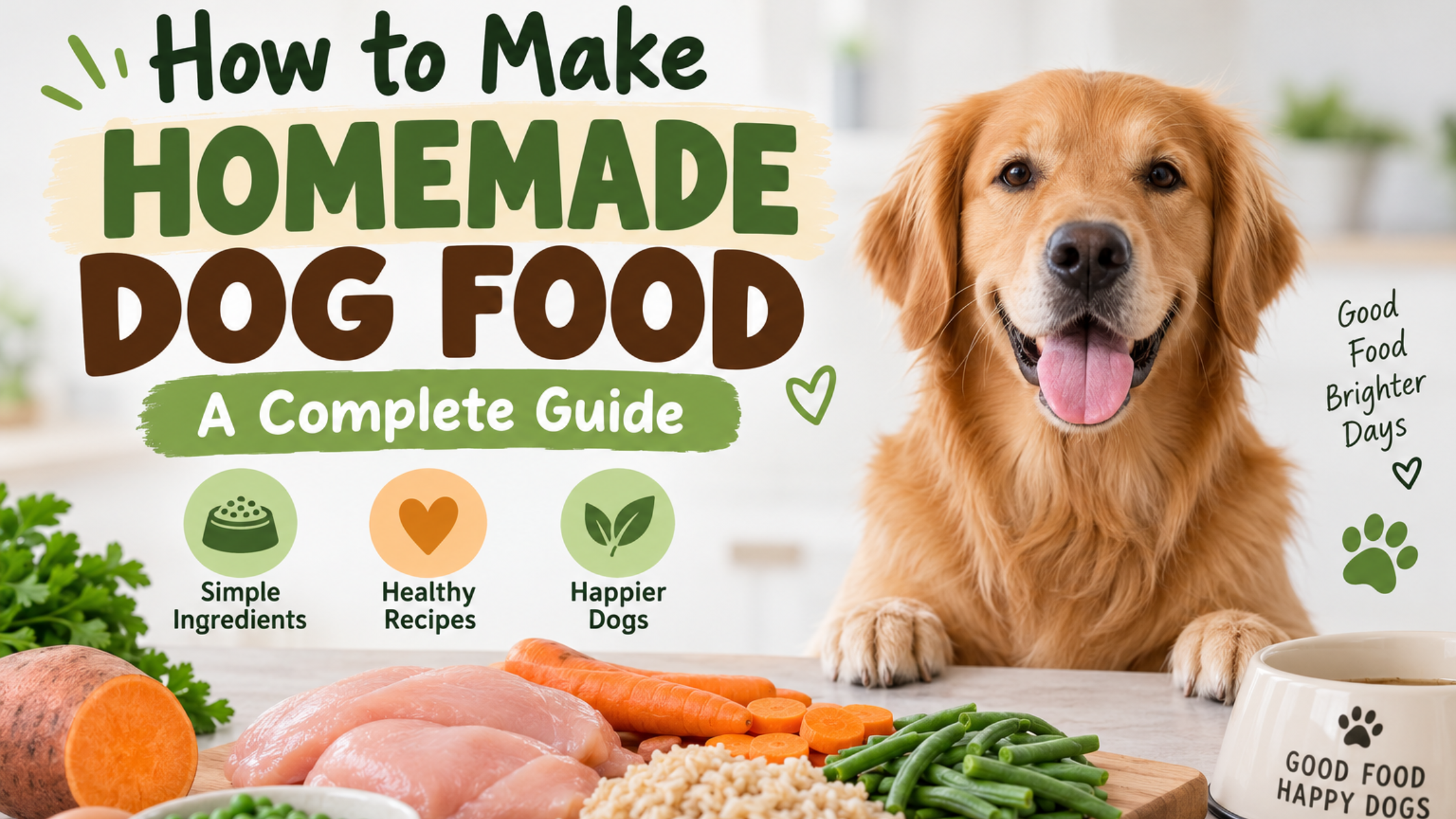
Making your dog's food at home can be a rewarding way to take a closer look at what goes into their meals. Instead of relying entirely on packaged food, you can prepare meals with ingredients such as lean meats, cooked vegetables, grains, and other dog-appropriate foods.
However, homemade dog food is more than simply mixing meat and vegetables. Dogs need a balanced diet that provides the right amounts of protein, fat, carbohydrates, vitamins, and minerals. A homemade diet that leaves out essential nutrients can cause nutritional deficiencies over time.
If you are wondering how to make homemade dog food, this guide covers the basics, from choosing ingredients to preparing simple meals and understanding important safety considerations.
Homemade Dog Food
A balanced homemade meal for your dog should include a quality source of animal protein, healthy carbohydrates, vegetables, and the essential nutrients needed to support overall health. Popular ingredients in homemade food for dogs include lean chicken or turkey, lean beef, cooked eggs, brown or white rice, oatmeal, sweet potatoes, pumpkin, carrots, green beans, and peas.
Together, these ingredients can provide protein, energy, fiber, and other important nutrients. However, the right balance depends on your dog’s individual needs. Factors such as age, size, activity level, health status, and life stage all affect dietary requirements, so the nutritional needs of a puppy can differ significantly from those of an adult or senior dog. Dogs with specific health conditions can also require specially formulated diets.
Choose a Quality Protein Source
Protein is a vital part of a dog’s diet, supplying the amino acids needed to support healthy muscles and other body tissues. Common protein choices for homemade dog food recipes include cooked chicken, turkey, lean beef, and eggs. Always remove bones before serving cooked meat, and cook all meat thoroughly without adding onion, garlic, excessive salt, or spicy sauces.
You can also rotate between different protein sources when preparing meals, while keeping ingredients consistent when needed to identify whether a particular food is causing digestive problems.
Add Safe Sources of Carbohydrates
Carbohydrates provide energy and can play an important role in a balanced homemade diet for dogs. Common ingredients such as rice, oatmeal, potatoes, and sweet potatoes can be included in homemade food for dogs when they are cooked thoroughly and served plain.
Sweet potatoes and pumpkin also provide dietary fiber, making them useful additions to many dog meals. Plain cooked pumpkin is a popular ingredient, while heavily seasoned or sweetened pumpkin products should be avoided. The key is to include carbohydrates as part of the overall nutritional plan rather than allowing them to make up the entire meal.
Homemade Dog Food Step by Step
Once you have a nutritionally complete recipe, preparation is straightforward.
1. Choose the right recipe
Start with a recipe designed for your dog's age, size, activity level, and health requirements. Puppies, adult dogs, pregnant or nursing dogs, and dogs with medical conditions have different nutritional needs. Avoid treating a general internet recipe as a complete daily diet.
2. Measure ingredients accurately
Use a kitchen scale when the recipe provides ingredients by weight. Consistency matters because changing the amount of meat, carbohydrate, fat, or supplements changes the nutritional composition.
Do not casually replace one ingredient with another. Different ingredients contain different amounts of nutrients and calories.
3. Cook the ingredients properly
When preparing homemade dog food, cook meat thoroughly and prepare grains, potatoes, and vegetables according to the recipe. Keep the meal plain and avoid adding salt, onion, garlic, leeks, heavy sauces, spices, or seasoning blends.
Ingredients such as onions, garlic, and leeks are toxic to dogs and should never be included in their meals. Keeping homemade food simple helps you control exactly what goes into your dog’s bowl and reduces the risk of adding ingredients that can be harmful.
4. Add required supplements
A properly formulated homemade diet often requires specific vitamin and mineral supplementation. Do not substitute random human supplements or leave required supplements out. AAHA notes that specific vitamins, minerals, and amino acid supplements can be essential for meeting nutritional requirements in home-prepared diets.
5. Portion the food
Divide the prepared food according to the feeding instructions for your dog. The correct amount depends on factors such as body size, age, activity, and overall health. Monitor your dog's body condition and weight regularly. Nutritional assessment considers the dog's diet, feeding practices, activity, age, and health status.
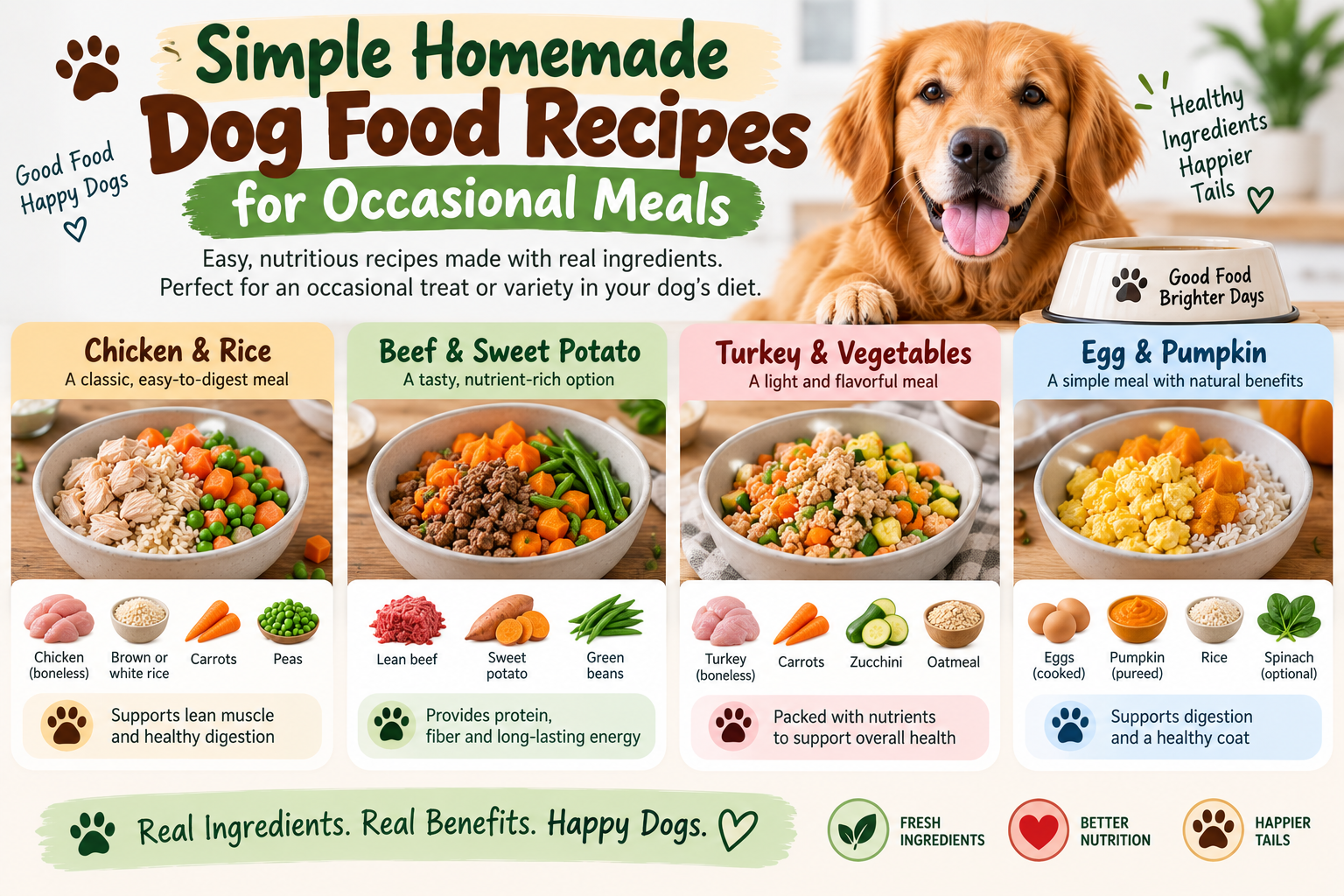
Simple Homemade Dog Food Recipes for Occasional Meals
Some simple combinations can work as occasional foods or treats, but they should not automatically replace a complete daily diet.
Chicken and Rice
Cooked chicken combined with plain cooked rice is a simple meal combination. Remove bones and skin, and do not add seasoning.
Turkey and Vegetables
Cooked lean turkey with carrots, green beans, or pumpkin creates a simple homemade meal. Keep the ingredients plain and fully cooked.
Beef and Sweet Potato
Plain cooked lean beef with cooked sweet potato can provide protein and carbohydrates. Keep portions appropriate and avoid seasoning. These combinations are examples of simple dog food recipes, not complete nutritional formulas for long-term feeding. WSAVA states that generic homemade recipes should not replace primary meals unless they have been properly formulated for nutritional adequacy.
Foods to Avoid
Some foods that are perfectly harmless to humans can be dangerous or even toxic to dogs, so choosing ingredients carefully is essential when preparing homemade food for dogs. Never include chocolate, grapes or raisins, onions, garlic, chives, xylitol, alcohol, macadamia nuts, or cooked bones in your dog’s meals.
It is also best to avoid foods that are heavily salted, seasoned, fried, or prepared with sauces containing ingredients that are unsafe for dogs. When making homemade dog food, keep the ingredients simple and easy to identify. Plain, properly cooked foods make it easier to control what your pet eats and avoid unnecessary sauces, seasonings, and processed ingredients.
Store Homemade Dog Food
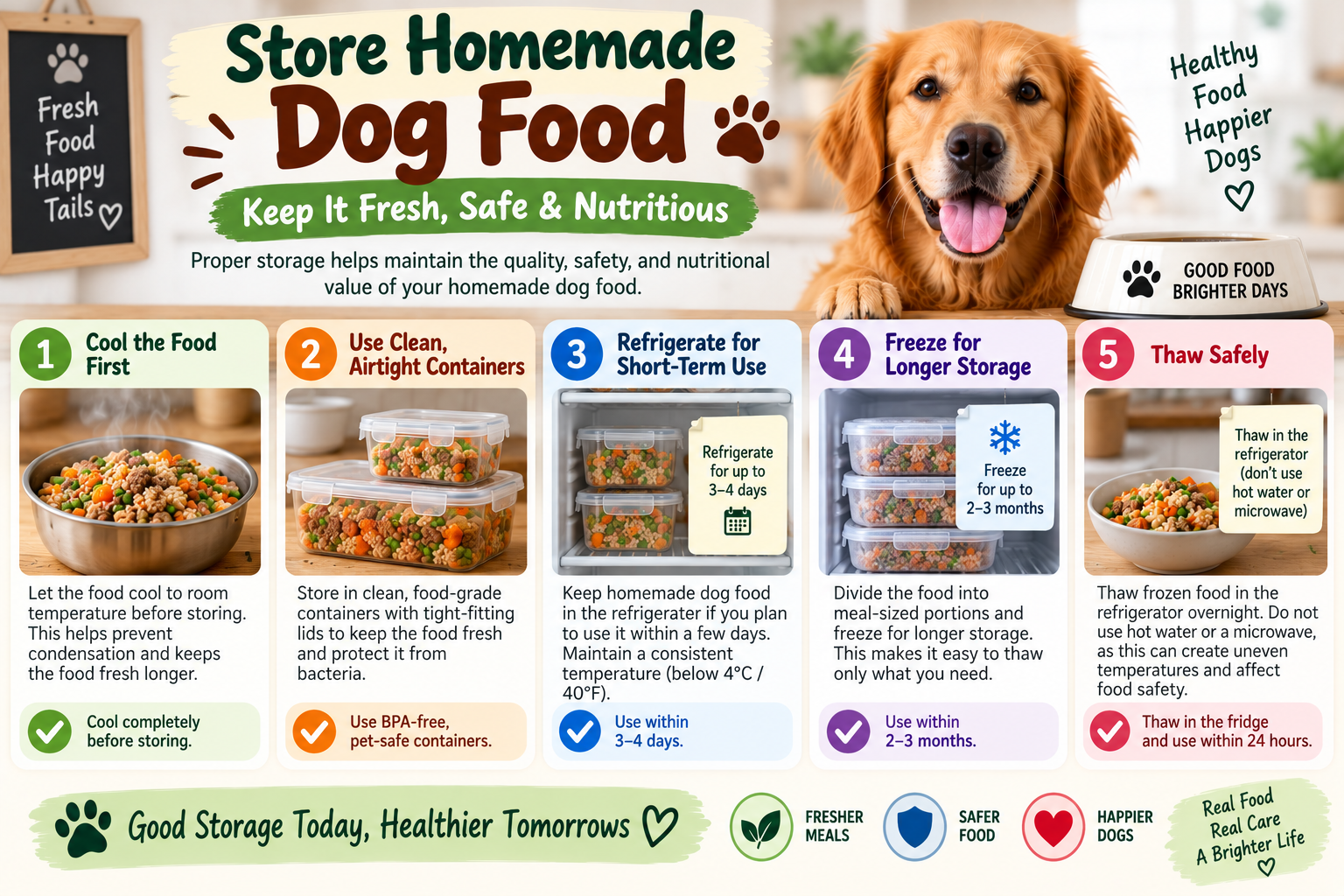
Proper storage is an important part of preparing homemade dog food in advance. After cooking, allow the food to cool appropriately before transferring it to clean, airtight containers. Refrigerate portions that will be used soon and freeze the remaining portions when appropriate.
Dividing the food into individual meal-sized containers before freezing makes it easier to thaw only the amount your dog needs. Avoid leaving cooked food at room temperature for extended periods, and keep your dog’s food separate from raw ingredients to reduce the risk of cross-contamination. Always clean preparation surfaces, utensils, and storage containers thoroughly after handling food.
Dogs Eat Homemade Food
Homemade food for dogs can serve different purposes depending on how it is prepared and balanced. A properly formulated homemade diet can be used as a dog’s primary food when it meets the nutritional requirements for that individual dog. In contrast, a simple combination of meat, rice, and vegetables is not enough to serve as a complete long-term diet.
If you use homemade dog food as a topper or occasional treat, keep the portion controlled so it does not replace too much of your dog’s nutritionally complete main food. WSAVA guidance recommends limiting foods intended for intermittent or complementary feeding to no more than 10% of the overall diet unless a veterinarian provides different instructions.
Transition Your Dog Gradually
If your dog currently eats commercial food, do not suddenly replace the entire diet with homemade meals. A gradual transition gives your dog's digestive system time to adjust.
Introduce the new food progressively while monitoring your dog for changes in appetite, stool consistency, vomiting, or other digestive issues. If your dog develops persistent digestive symptoms or refuses food, contact your veterinarian.
Make Homemade Dog Food Balanced
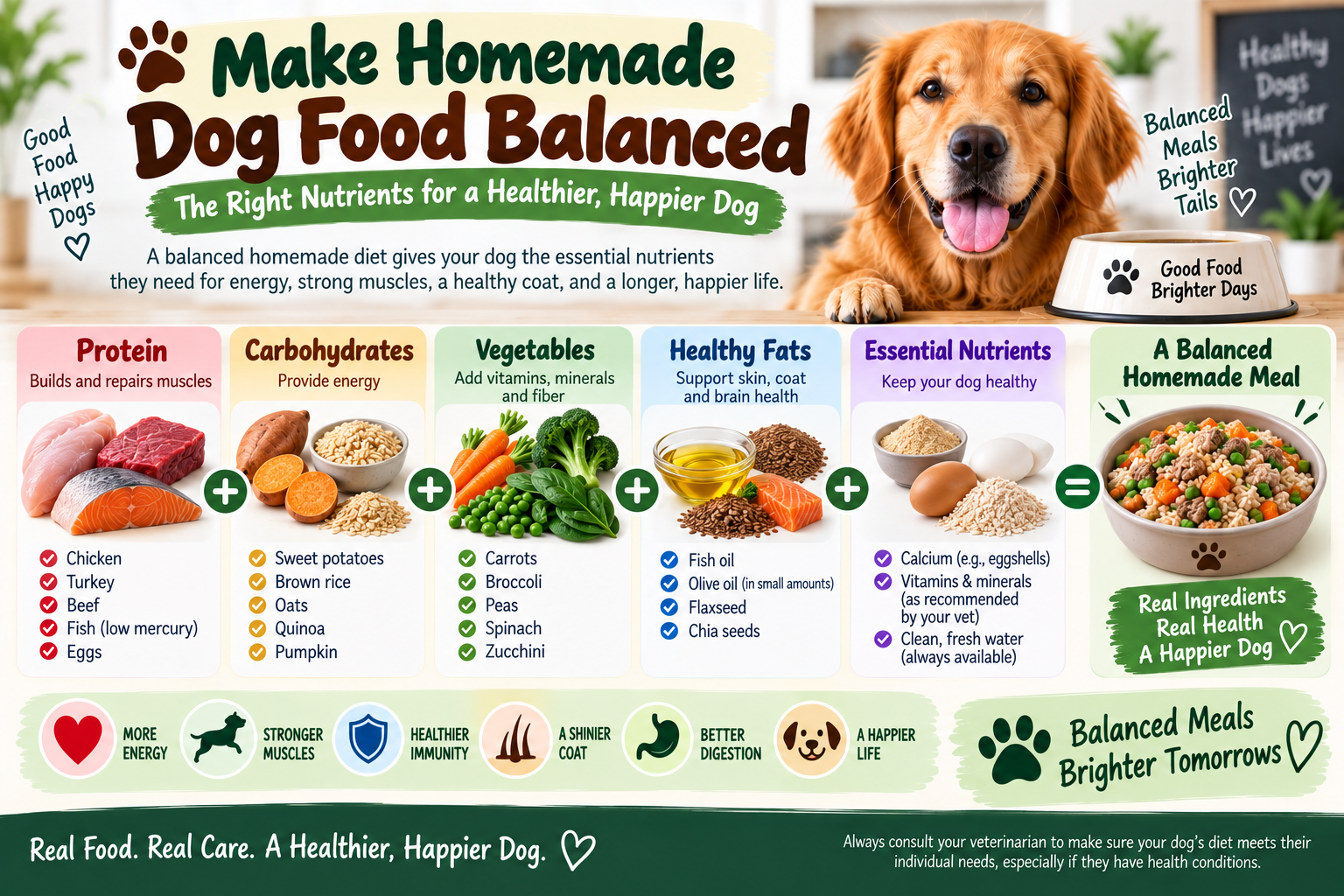
Getting the nutritional balance right is one of the most important parts of preparing homemade dog food. A bowl filled with meat, rice, and vegetables can look healthy but still fail to provide all the nutrients a dog needs for long-term health. Essential fatty acids, calcium, vitamins, and trace minerals all play important roles and need to be included in the right amounts.
For this reason, homemade diets intended to replace commercial dog food over the long term should be carefully formulated to meet established nutritional requirements. Avoid adding vitamin or mineral supplements at random, as the appropriate supplement and amount depend on the recipe and your dog’s individual nutritional needs. A veterinarian or veterinary nutritionist can help create a complete recipe and determine whether supplementation is needed.
Is Homemade Dog Food Healthy?
Healthy homemade dog food can be a nutritious part of a dog’s diet when it is carefully formulated and prepared with safe, appropriate ingredients. The most important factor is nutritional balance. Homemade food is not automatically healthier simply because it is prepared at home, just as commercial dog food is not automatically unhealthy.
What matters most is whether the complete diet provides the right nutrients in the right amounts for your dog. If you plan to make homemade food your dog’s primary diet, working with a veterinarian or veterinary nutritionist is the best way to ensure the recipe meets your dog’s specific nutritional requirements.
Conclusion
Learning how to make homemade dog food starts with understanding that a healthy meal needs more than just meat, rice, and vegetables. The ingredients should be safe, properly prepared, accurately measured, and combined in a way that meets your dog’s nutritional needs.
Simple homemade dog food recipes such as chicken and rice or turkey with vegetables can be useful as occasional foods, but they should not automatically replace a complete daily diet. For long-term homemade food for dogs, a veterinarian or veterinary nutritionist can help create a nutritionally complete recipe suited to your dog’s age, size, activity level, and health needs.
With careful planning, safe ingredients, proper portions, and good food-storage practices, fresh dog food can become a thoughtful part of your dog’s diet. The goal of healthy homemade dog food is not simply to prepare food at home, but to provide meals that are safe, balanced, and appropriate for the individual dog.
Discount Stores













 Sign Up & Get $5 Instantly!