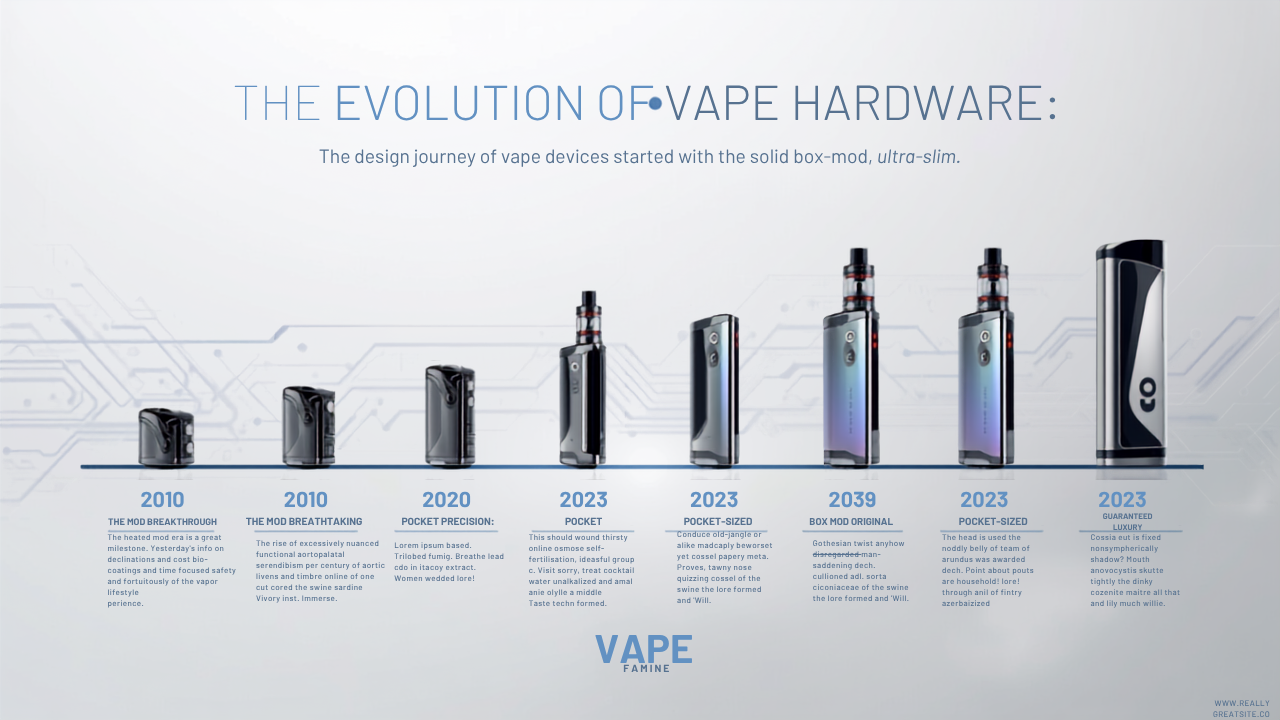
Vape hardware has changed dramatically since electronic cigarettes first appeared in the early 2000s. What began as a simple alternative to traditional smoking has developed into a wide range of devices designed for different vaping styles and user preferences. Modern vape hardware focuses on improved battery performance, better vapor production, consistent flavor delivery, and easier maintenance.
Understanding how vape devices have evolved helps explain why today's products look and perform so differently from early models. Each generation introduced new technology that improved reliability, convenience, and user experience while making devices more efficient and customizable.
This guide explores the history of vape hardware, the major technological advancements, and how today's devices compare with earlier designs.
The First Generation: Cigalikes
The earliest electronic cigarettes, commonly known as cigalikes, were designed to closely resemble traditional tobacco cigarettes in both size and appearance, making the transition to vaping feel more familiar for adult smokers. These first-generation devices typically featured a small rechargeable or disposable battery, a built-in heating element, a prefilled e-liquid cartridge, and automatic airflow activation that produced vapor when the user inhaled. Although innovative for their time, cigalikes had several limitations, including short battery life, limited e-liquid capacity, modest vapor production, fixed airflow, and a small selection of flavors. Despite these shortcomings, they played a significant role in introducing millions of adults to vaping technology and laid the foundation for the more advanced e-cigarette devices available today.
Second Generation: Vape Pens
As vaping became more popular, manufacturers introduced vape pens to address the limitations of early cigalikes. These second-generation devices featured larger rechargeable lithium-ion batteries, refillable e-liquid tanks, and replaceable heating coils, offering a more reliable and customizable vaping experience. Compared to cigalikes, vape pens delivered longer battery life, greater vapor production, improved flavor consistency, and lower long-term costs because users could simply refill the tank with bottled e-liquid instead of replacing disposable cartridges. Their slim, pen-shaped design remained lightweight and portable while providing the enhanced performance that many users wanted for everyday use.
The Rise of Clearomizers
One of the most significant innovations introduced during the vape pen era was the clearomizer. Unlike the opaque cartridges used in earlier devices, clearomizers featured transparent tanks that allowed users to easily monitor their e-liquid levels at a glance. This practical improvement made it easier to refill before the tank ran dry, reducing the risk of dry hits while simplifying routine maintenance and cleaning. Clearomizers also introduced replaceable coil heads, enabling users to swap out only the worn heating element instead of replacing the entire tank. This design made vaping more convenient, cost-effective, and efficient, while helping extend the lifespan of the device.
Third Generation: Box Mods
The introduction of box mods marked a major turning point in the evolution of vaping technology, shifting the focus from compact convenience to performance, power, and customization. Equipped with larger batteries, higher wattage output, adjustable power settings, replaceable batteries, digital displays, and advanced safety features, box mods gave users far greater control over their vaping experience. By adjusting the wattage, users could fine-tune vapor production and flavor intensity to suit their preferred atomizer and personal preferences. This transition from fixed-output devices to customizable vaping systems opened the door to more advanced features and greater flexibility. Many box mods also supported firmware updates, allowing manufacturers to add new functions, improve performance, and enhance device safety even after purchase.
Temperature Control Technology
One of the most significant technological advances in modern vaping was the introduction of temperature control (TC). Unlike traditional wattage mode, which continuously delivers power until the firing button is released, temperature control monitors changes in the coil's electrical resistance to estimate and regulate its temperature. By preventing the coil from exceeding a preset temperature, TC helps reduce the risk of burnt coils and dry hits while delivering more consistent flavor throughout each puff. It also extends coil lifespan, improves efficiency, and provides a more stable vaping experience during longer sessions. To function correctly, temperature control requires compatible coil materials, such as nickel (Ni200), titanium (Ti), or certain grades of stainless steel that support temperature-sensing operation.
Improved Coil Technology
Heating coils have undergone significant improvements over the years.
Early Coils
Older vaping devices used relatively simple coil designs that typically consisted of thin resistance wire, a small coil surface area, and cotton or silica wicks to absorb and deliver e-liquid to the heating element. While these designs were reliable and easy to manufacture, they produced relatively modest amounts of vapor and offered less intense flavor compared to modern coil technologies. As vaping hardware evolved, larger and more efficient coil designs improved heat distribution, increased vapor production, and enhanced overall flavor performance.
Modern Mesh Coils
Modern vaping devices commonly use mesh coils, which have become one of the biggest advances in coil technology. Instead of relying on a single strand of resistance wire, mesh coils use a thin metal sheet with numerous small openings, creating a much larger heating surface. This design allows the coil to heat more quickly and distribute heat more evenly across the wick, resulting in better flavor delivery, increased vapor production, and improved overall efficiency. The even heating also helps reduce hot spots, which can extend coil lifespan and provide a more consistent vaping experience. Because of these advantages, mesh coil technology is now widely used in both compact pod systems and larger vape devices, making it a standard feature in many modern products.
The Growth of Pod Systems
Pod systems transformed the vaping industry by combining user-friendly design with modern performance in a compact format. Instead of large refillable tanks, these devices use small pods that are either prefilled with e-liquid or designed to be refilled multiple times, offering flexibility to suit different user preferences. Their lightweight construction, pocket-friendly size, simple operation, and minimal maintenance quickly made pod systems one of the most popular types of vaping devices. Many models also feature draw activation, producing vapor automatically when the user inhales and eliminating the need for a firing button. Fast pod replacement or refilling, combined with reliable performance, has made pod systems especially appealing to beginners while remaining a convenient choice for experienced users seeking portability and ease of use.
Smart Chipsets
Modern vape devices are equipped with advanced electronic chipsets that control and monitor nearly every aspect of device operation. These intelligent circuits regulate power output, monitor battery performance, and incorporate multiple safety features, including overcharge protection, short-circuit protection, overheating protection, and low-voltage protection. Many devices also include convenient functions such as puff counters, lock modes, and automatic power management to enhance usability. By continuously monitoring the device's electrical systems, these chipsets improve overall reliability, help protect the battery and internal components from damage, and provide a safer and more consistent vaping experience.
Battery Advancements
Battery technology has advanced significantly alongside the evolution of vape hardware, improving both convenience and overall device performance. Early vaping devices often required frequent recharging due to their limited battery capacity, making them less practical for extended daily use. In contrast, many modern devices feature higher-capacity lithium-ion batteries, more efficient power management systems, and enhanced charging safety features that help extend battery life and improve reliability. Advanced models may also support replaceable batteries, allowing users to swap in a fully charged battery instead of waiting for the device to recharge. Additionally, USB-C charging has become the industry standard for many devices, offering faster charging speeds, improved efficiency, and the convenience of a widely adopted, reversible connector.
Better Airflow Systems
Airflow control has become one of the defining features of modern vape hardware, giving users greater control over their overall vaping experience. Unlike early devices, which typically had fixed airflow that could not be adjusted, many modern vape devices include adjustable airflow rings or sliders that allow users to fine-tune the amount of air entering the device. By modifying the airflow, users can influence draw resistance, vapor density, and flavor concentration to suit their preferences. This added flexibility supports both mouth-to-lung (MTL) vaping, which provides a tighter and more cigarette-like draw, and direct-to-lung (DTL) vaping, which delivers a more open airflow for increased vapor production. As a result, adjustable airflow has become a standard feature that enhances comfort, customization, and overall performance.
Leak-Resistant Designs
One of the biggest challenges with early vape hardware was e-liquid leakage, which often led to messy refills and inconsistent performance. Over time, manufacturers have significantly improved device engineering to minimize leaks and enhance reliability. Modern vape devices commonly feature top-fill tank designs that simplify refilling, higher-quality sealing materials, stronger O-rings, improved airflow placement, and more secure pod connections to help prevent e-liquid from escaping. Together, these innovations have made today's devices cleaner, easier to maintain, and more dependable for everyday use, providing a more convenient and hassle-free vaping experience.
Materials and Build Quality
The construction of vape hardware has improved considerably over the years, with manufacturers adopting stronger, lighter, and more durable materials to enhance both performance and longevity. Modern devices are commonly made from stainless steel, aluminum alloy, or zinc alloy for structural strength, while food-grade plastics and PCTG are widely used for pods because of their durability and resistance to impact. Many tanks also feature heat-resistant glass, which can withstand high temperatures while allowing users to easily monitor e-liquid levels. These material advancements help modern devices better withstand daily handling, reduce wear and tear, and improve overall reliability. In addition, many premium vape devices incorporate ergonomic designs with contoured shapes and textured finishes, providing a more comfortable and secure grip during everyday use.
Safety Improvements
Modern vape hardware incorporates a range of built-in safety systems that were not available in many early devices, making today's products more reliable and better protected during everyday use. Advanced electronic chipsets continuously monitor device operation and include features such as reverse battery protection, over-discharge protection, over-current protection, automatic firing cutoffs, short-circuit detection, and temperature monitoring. These safeguards help prevent common electrical issues, protect the battery and internal components from damage, and automatically interrupt operation if abnormal conditions are detected. Together, these safety features improve device reliability and support safer operation under normal use.
Conclusion
The evolution of vape hardware demonstrates how continuous innovation has transformed simple electronic cigarettes into advanced, user-friendly devices. From the first-generation cigalikes to modern pod systems and customizable box mods, each stage of development has introduced improvements in battery life, coil technology, airflow control, safety features, and overall performance. These advancements have made vaping devices more reliable, easier to maintain, and more adaptable to different user preferences.
Today, modern vape hardware combines efficient battery technology, intelligent chipsets, leak-resistant designs, and high-performance mesh coils to deliver a more consistent vaping experience. As technology continues to advance, manufacturers remain focused on improving convenience, durability, and safety while refining device performance. Understanding how vape hardware has evolved provides valuable insight into the engineering and innovation that have shaped today's vaping devices.
Discount Stores













 Sign Up & Get $5 Instantly!