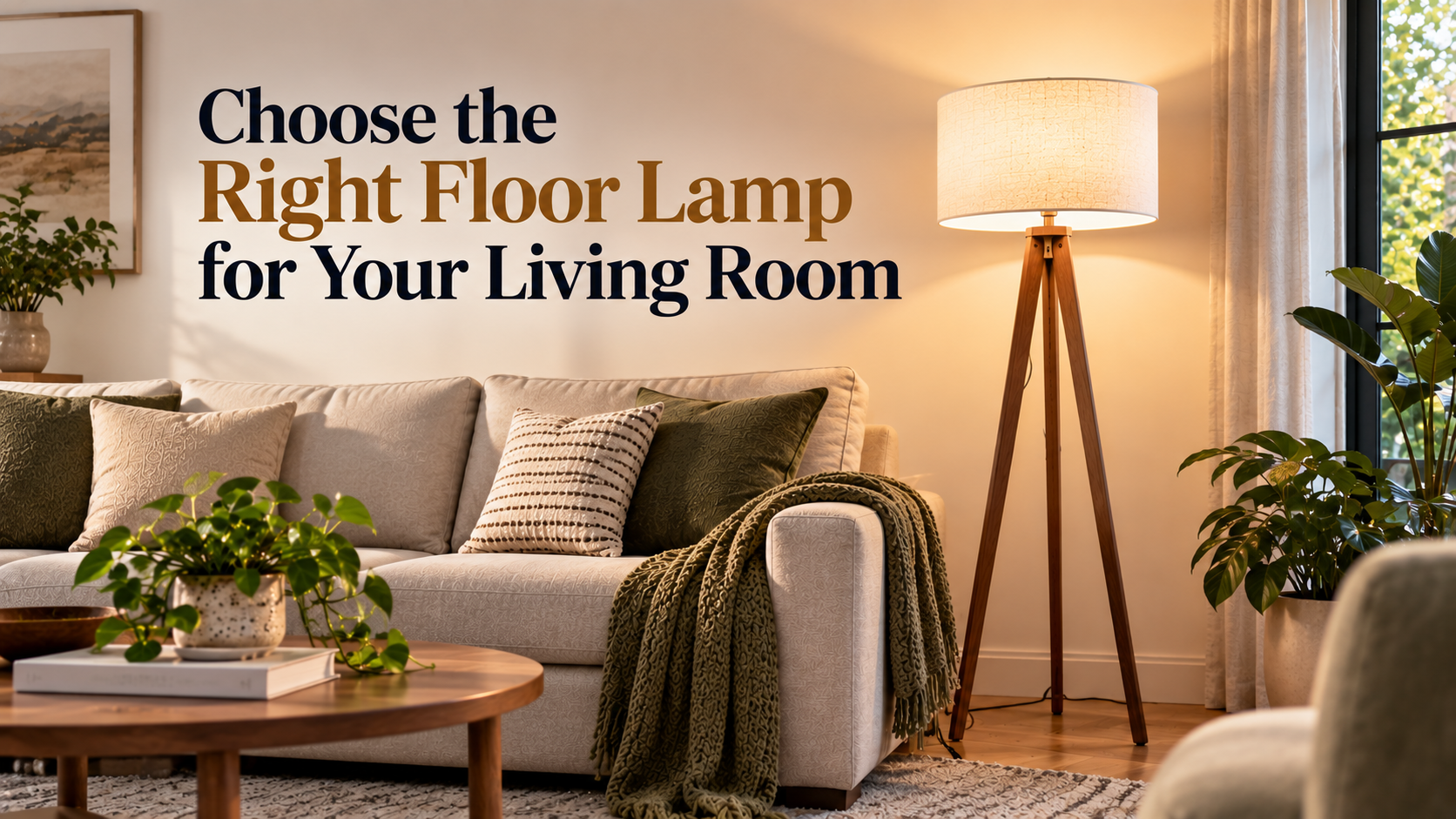
A floor lamp can do much more than brighten a dark corner. The right lamp can make your living room feel warmer, more comfortable, and better balanced while providing useful light for reading, relaxing, or entertaining. With so many styles and sizes available, choosing the right one starts with understanding how you use your space.
The best floor lamp for living room spaces should suit the room’s size, furniture arrangement, lighting needs, and overall style. A tall lamp can add height beside a sofa, while a corner floor lamp can brighten an unused area without taking up valuable seating space. Modern floor lamps can also become decorative features in their own right.
Here are the key things to consider before choosing a floor lamp for your living room.
Consider What You Need the Lamp to Do and How You Use the Room
Start by thinking about what you want the lamp to do, because different living rooms have different lighting needs. If you need general illumination, choose a lamp that directs light upward or spreads it across a wider area to create a soft, even glow.
For reading, knitting, working, or other detailed activities, a lamp that directs light toward your seating area is more practical. You might also want a floor lamp to brighten a dark corner or add another layer of light alongside ceiling fixtures and table lamps.
Think about how you actually use the room and where your furniture is placed. A lamp beside a sofa or armchair can provide convenient task lighting, while one positioned behind or beside furniture can help brighten darker areas.
Focusing on your lighting needs first makes it easier to choose from the many living room floor lamps available without being distracted by appearance alone.
Choose the Right Floor Lamp Height
Height is one of the most important factors when selecting a floor lamp. A tall floor lamp can work particularly well beside sofas, armchairs, and other large pieces of furniture because its height helps distribute light without taking up much floor space.
However, the lamp should not overwhelm the furniture around it. Consider the height of nearby seating, shelves, tables, and artwork before deciding how tall the lamp should be.
For a reading lamp positioned beside a chair or sofa, make sure the light source is placed at a useful height for your activity. You should be able to use the lamp comfortably without having the shade directly in your line of sight.
Think About the Lamp's Purpose and the Size of Your Living Room
Different floor lamp designs create different types of lighting, so think about how you want the light to work in your living room. Some lamps provide broad, general illumination, while others direct light toward a specific area. An arc lamp, for example, can extend over a sofa or chair and provide focused light without taking up space beside the seating.
A traditional floor lamp with a fabric shade can create a softer glow that spreads through the surrounding area. If you need a reading light, choose a design that directs enough light toward your book or other material without shining directly into your eyes. For general room lighting, look for a lamp that spreads light across a wider area rather than concentrating it in one spot. The size of your living room should also guide your choice.
A large room can accommodate a larger statement lamp, while a slim design can provide useful lighting in a smaller space without taking up valuable floor area. Pay attention to the base as well. A wide base can provide good stability but requires more room, while a narrow base takes up less space but still needs to be sturdy enough for everyday use.
Before buying, measure the area where you plan to place the lamp so you can choose a size that fits comfortably and avoid the surprise of a fixture looking much larger in person than it did in a photograph.
Find the Right Place for Your Lamp
Placement can make a major difference to how useful and attractive a floor lamp becomes. Corners are often overlooked when arranging living-room lighting, making a corner floor lamp a practical way to brighten an otherwise dark area.
A floor lamp can also sit beside a sofa, armchair, console, or cabinet. Leave enough space around the lamp for people to walk comfortably and avoid placing it where the cord creates a trip hazard.
Consider nearby outlets before deciding on the final position. A lamp that requires an extension cord running across a walkway is poorly positioned, regardless of how attractive it looks.
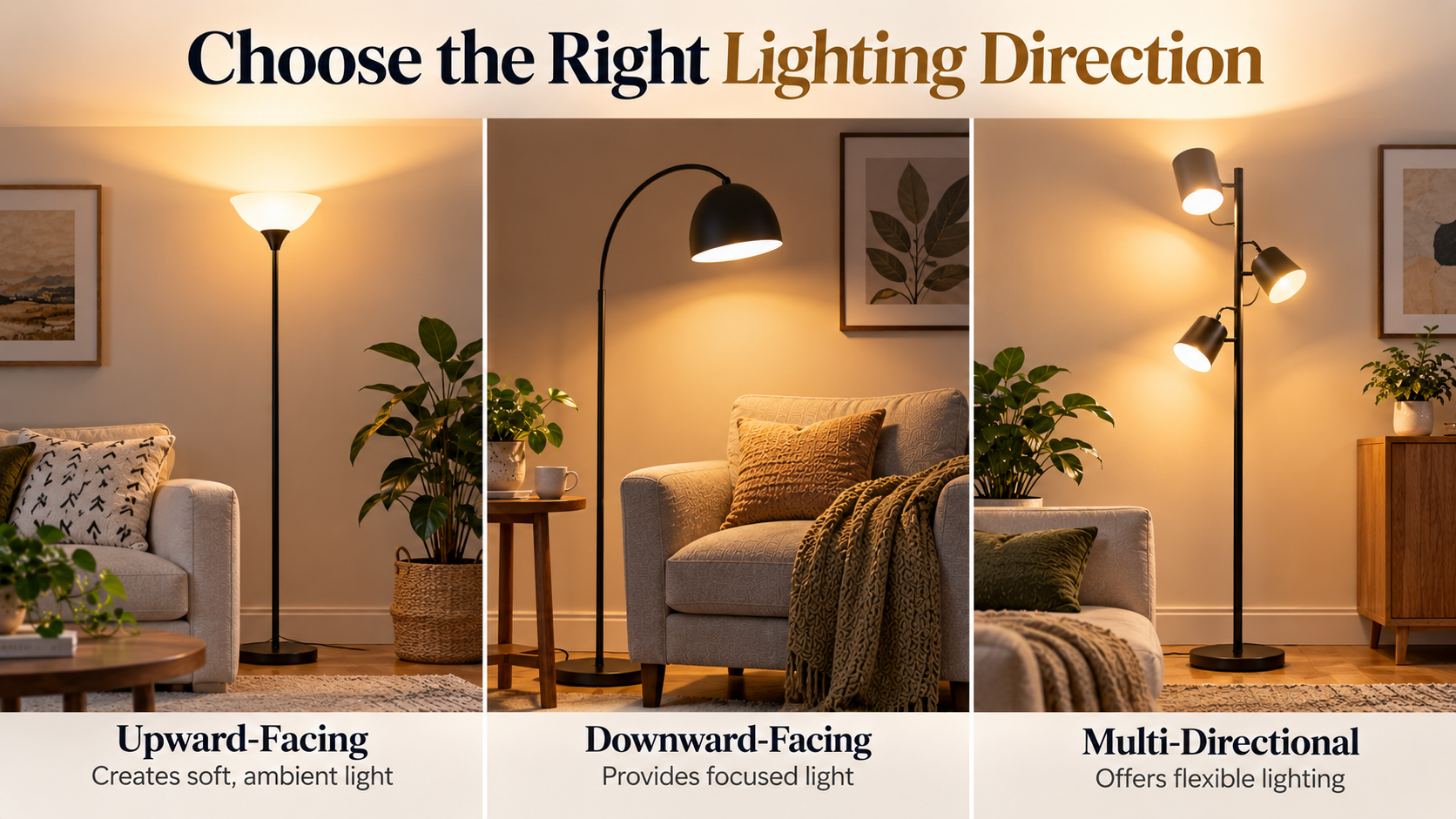
Choose the Right Lighting Direction
Not every floor lamp distributes light in the same way.
Upward-facing lamps direct light toward the ceiling, allowing it to reflect back into the room and create a soft, indirect glow. They are a good choice when you want gentle ambient lighting rather than a strong beam focused on one area.
Downward-facing lamps direct light toward a specific area, making them particularly useful for reading, writing, or other activities that require focused illumination. They can provide practical task lighting while keeping the surrounding room comfortably lit.
Multi-light floor lamps use multiple light sources to spread illumination in different directions, making them a practical choice when you want a combination of ambient and task lighting. You can direct individual lights toward different areas of the room, such as a seating area, reading chair, or darker corner, while still creating a warm overall glow.
An adjustable lamp can also give you more control over where the light falls. Think about whether you want the lamp to illuminate the entire room or concentrate light in one specific area.
Match the Lamp to Your Living Room Style
A floor lamp should work with the rest of your interior rather than looking like a separate addition. For contemporary interiors, modern floor lamps with simple shapes, clean lines, and understated finishes can complement the room without overwhelming it.
Traditional living rooms can work well with lamps featuring classic shades, decorative bases, or warmer finishes. You do not necessarily need the lamp to match every piece of furniture.
Instead, look for connections between the lamp and existing elements such as metal finishes, wood tones, fabric textures, or other decorative details. A well-chosen lamp can also introduce a small contrast that gives the room more visual interest.
Consider Brightness and Bulb Type
The right brightness depends on how you plan to use the lamp. A floor lamp for reading should provide enough light to make text clear and comfortable to read, while a decorative lamp can use softer illumination to create a relaxed atmosphere.
Before buying a bulb, check the lamp’s requirements and choose one that matches the manufacturer’s specifications. LED bulbs are a popular choice because they use less electricity than traditional incandescent bulbs and typically have a long service life.
They also come in a range of brightness levels and color temperatures, giving you more flexibility when creating the right atmosphere. For living rooms, warmer light often creates a cozy and inviting feel, while cooler light gives the space a brighter, more neutral appearance and can be useful where clearer visibility is needed.
Consider the Base, Stability and the Lamp's Materials
A beautiful floor lamp is only practical if it is stable and safe to use. Choose one with a sturdy base that suits its height and overall design, especially if you have children or pets who could accidentally bump it. Position the lamp where it is less likely to be knocked over or get in the way. The size of the base also matters.
A wider base provides greater stability but takes up more floor space, while a smaller base can work better in a compact living room. Materials also play an important role in how the lamp fits into your décor. Metal can give a clean, contemporary look, while wood brings a warmer, more natural feel.
Fabric shades can soften the appearance and diffuse the light, whereas exposed bulbs create a more direct visual effect. Look at the materials already used in your room, such as wooden furniture, metal accents, glass surfaces, and textured fabrics, and choose a lamp that complements them. When these elements work together, the lighting feels like a natural part of the room rather than an added piece.
Use More Than One Light Source
A floor lamp does not have to provide all the lighting in your living room. In fact, combining different light sources can create a more comfortable and layered environment. You might combine a ceiling fixture with a floor lamp and a table lamp. This allows you to use different lights depending on what you are doing.
For example, you can use softer general lighting while watching television and turn on a nearby floor lamp when reading. This approach also prevents the room from relying on one extremely bright light source.
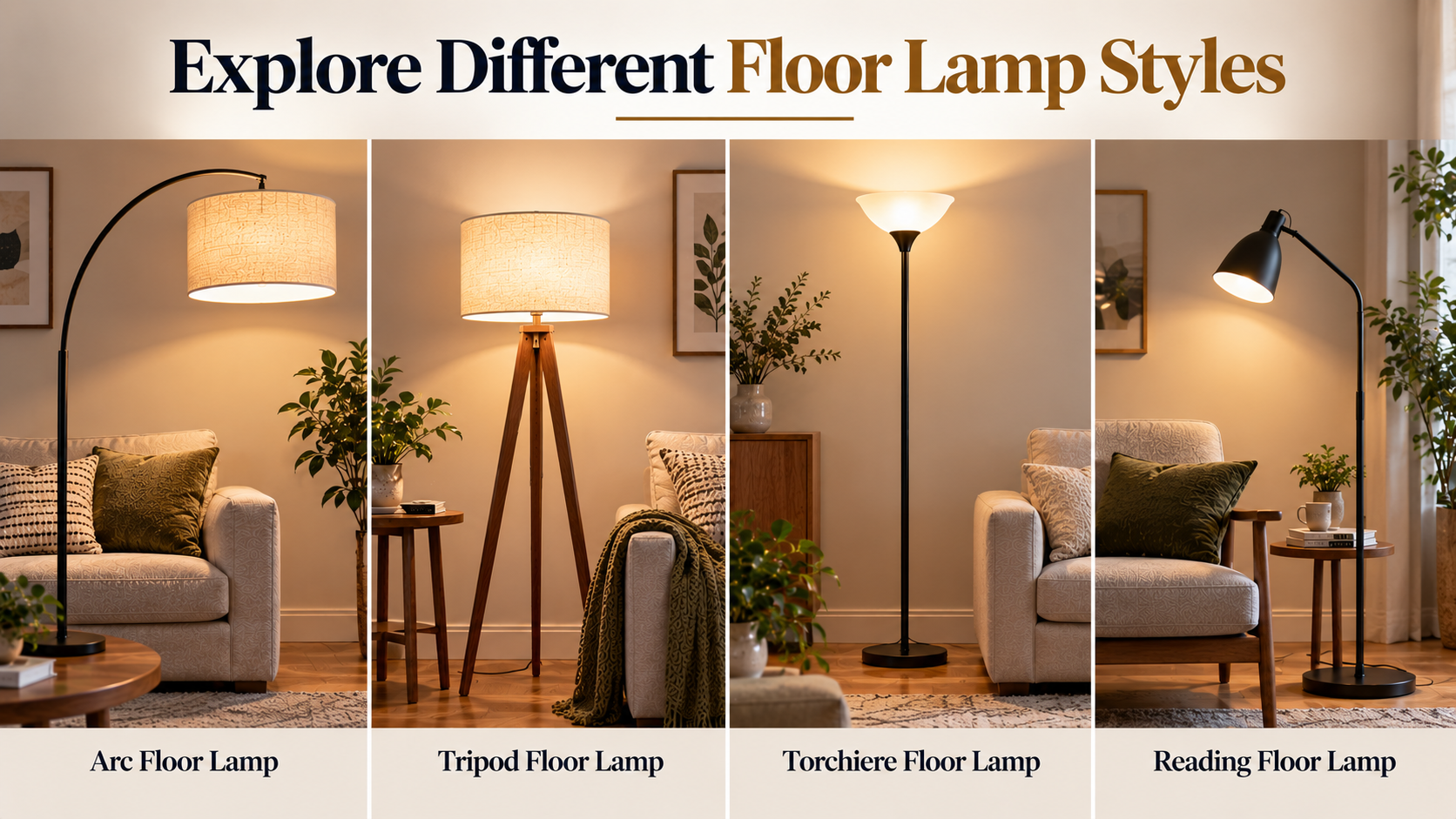
Explore Different Floor Lamp Styles
There are plenty of floor lamp ideas to consider depending on the look and function you want.
An arc floor lamp has a curved arm that extends over a sofa or chair, allowing the base to sit behind the seating area while directing light forward. This design is especially useful when you want focused lighting without taking up space beside the furniture.
A tripod floor lamp stands on three legs, giving it a distinctive look while providing stable support. Its sculptural design can add visual interest to a living room and work well as both a practical light source and a decorative feature.
A torchiere lamp directs light upward toward the ceiling, creating soft, indirect illumination that spreads throughout the room. It is primarily used for ambient lighting and can help brighten a living room without producing harsh, focused light.
A reading floor lamp is designed to provide focused light, making it a practical choice beside a chair or sofa. It directs illumination toward your reading area, helping you see books or other materials comfortably without lighting up the entire room.
Each style serves a different purpose, so think about function before choosing a particular shape.
Floor Lamp Ideas for Different Spaces
If your living room has an empty corner, a corner floor lamp can turn that unused space into a useful lighting zone. A tall floor lamp beside a sofa can add height and provide convenient reading or ambient light.
For a contemporary room, choose modern floor lamps with clean silhouettes and simple finishes. If your seating area is large, an arc-style lamp can extend over a chair or sofa without requiring a side table.
For smaller rooms, look for a slim design that provides useful illumination without taking up too much floor space. The right choice depends on the space available and the type of lighting you need.
Conclusion
Choosing the right floor lamp starts with understanding your living room, your lighting needs, and how you use the space. Consider the lamp’s height, size, placement, brightness, lighting direction, stability, and style before making your choice. A tall floor lamp can add height beside a sofa, while a corner floor lamp can brighten an unused area without taking up much seating space.
The best floor lamp for living room spaces should provide useful light while fitting naturally with your furniture and décor. From modern floor lamps and arc designs to reading lamps and torchiere styles, there are plenty of floor lamp ideas to suit different rooms and purposes.
Take a few measurements, think about where the light is needed, and choose a design that feels comfortable and practical. With the right combination of function, size, and style, a floor lamp can make your living room brighter, more inviting, and easier to enjoy every day.
Discount Stores













 Sign Up & Get $5 Instantly!