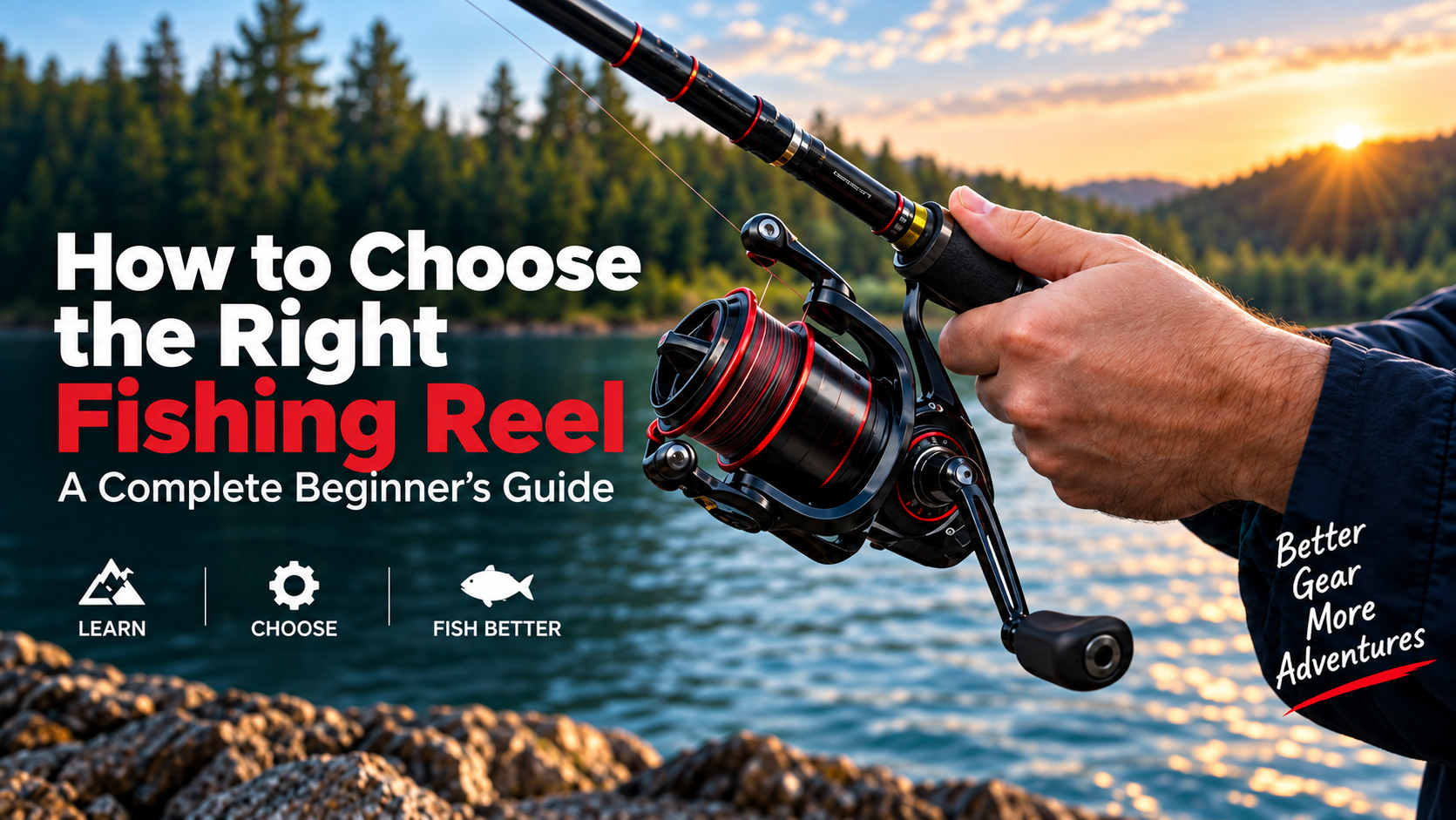
Choosing your first fishing reel can feel confusing. Reels come in different sizes, gear ratios, designs, and materials, and each one is suited to a different style of fishing. The good news is that you do not need to understand every technical detail before buying your first reel.
The right reel depends mainly on where you fish, what you want to catch, which fishing rod you use, and how you prefer to fish. For most beginners, a spinning reel is the easiest place to start. It is simple to operate, works with many types of fishing lines, and is suitable for everything from small freshwater fish to medium-sized species.
This guide explains the basics of fishing reel size, spinning reel size, reel gear ratio, and other important features so you can choose the best fishing reel for your needs.
Type of Fishing You Plan to Do
The right fishing reel depends on where you fish and the type of fishing you enjoy. Before choosing a reel, think about the kind of fishing you plan to do most often. For beginners, spinning reels are a great starting point because they are easy to use, work with different types of fishing line, and are suitable for many freshwater fishing situations. Baitcasting reels give anglers more control and are often used with heavier tackle or when precise casting is important, but they take some practice to master. Fly reels are made specifically for fly fishing and work differently from spinning and baitcasting reels. If this is your first fishing reel and you want something simple and easy to handle, a spinning reel is a practical choice.
Type of Fishing Reel
Before choosing a size, decide which type of reel you need.
The three common choices are:
-
Spinning reels: Easy to learn and versatile. The spool sits below the rod, and the line comes off the spool during a cast.
-
Baitcasting reels: Designed for greater casting control and accuracy. They require more practice because the spool rotates while you cast.
-
Spincast reels: Simple to operate and often used by beginners and young anglers. A covered spool helps make casting straightforward.
For someone buying their first reel, a spinning reel is usually the most practical option. It handles many common fishing situations without requiring advanced casting skills.
Fishing Reel Size
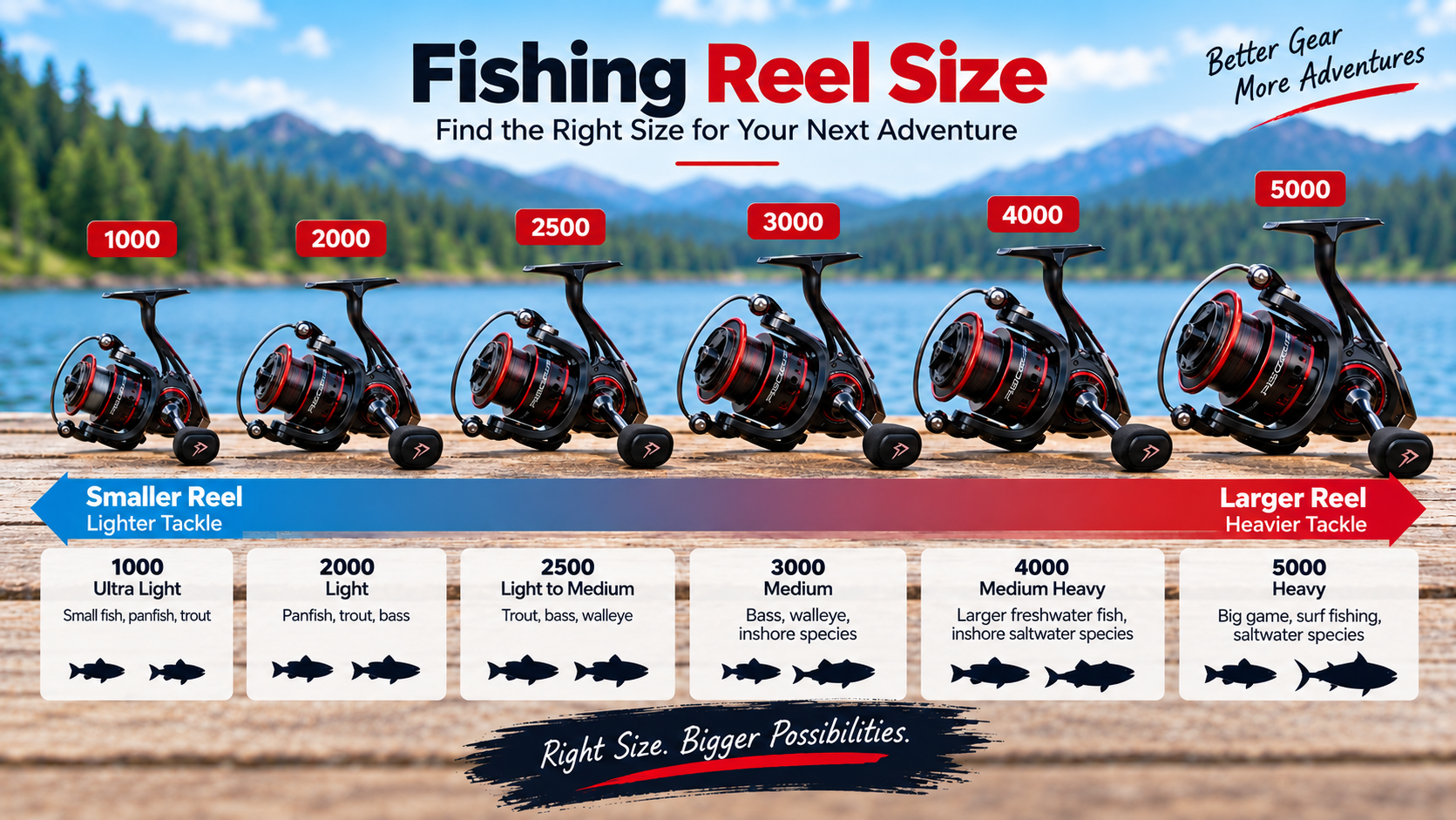
Fishing reel size is an important part of choosing the right reel. The size gives you an idea of how much line the reel can hold and the type of fishing it is designed for. Spinning reels are commonly labelled with sizes such as 1000, 2500, 3000, 4000, and 5000. Smaller reels are usually better suited to lighter rods, thinner lines, and smaller fish, while larger reels are designed to handle heavier line and tackle. For many beginners who fish in freshwater, a spinning reel size of 2500 or 3000 offers a good balance of size, line capacity, and versatility. However, the number alone should not determine your choice. Always make sure the reel matches the rod and fishing line you plan to use.
Match the Reel to Your Fishing Rod
Your reel should feel comfortable and well balanced with your rod. A heavy reel on an ultralight rod can make the setup awkward to handle, while a reel that is too small for a heavier rod can limit your options on the water. Before choosing a reel, check your rod’s specifications for its recommended line weight, lure weight, rod power, and rod action. A light spinning rod typically works well with a smaller spinning reel, while a medium or medium-heavy rod is better suited to a larger reel. When the rod and reel are properly matched, the setup feels more comfortable and easier to control, especially when you are casting repeatedly. This is particularly important for beginners, as a typical fishing session can involve dozens or even hundreds of casts.
Reel Gear Ratio
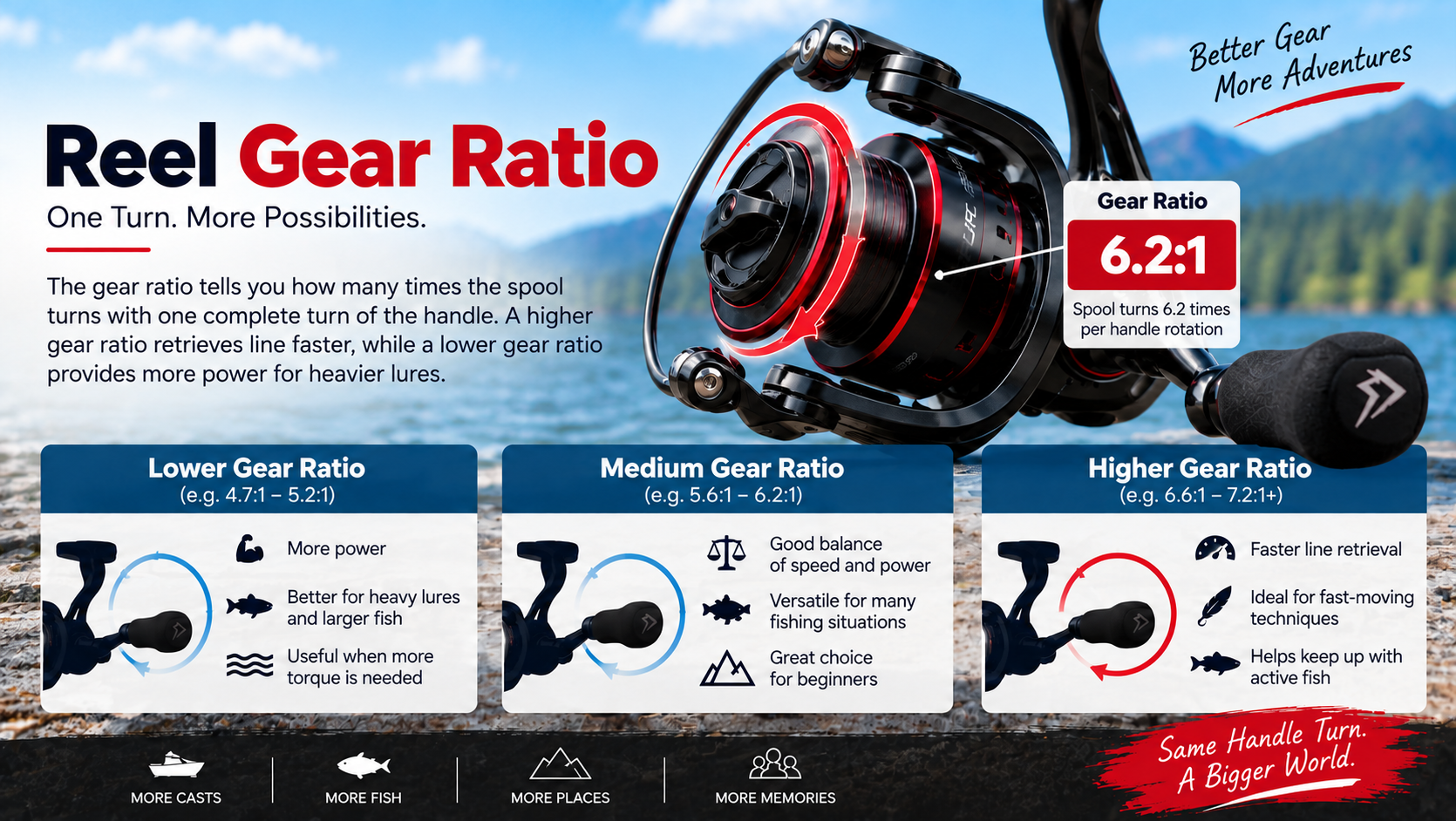
The reel gear ratio tells you how many times the spool or rotor turns when you make one complete turn of the reel handle. For example, a 6.2:1 gear ratio means the reel’s internal mechanism turns the spool or rotor about 6.2 times for every turn of the handle.
A higher gear ratio retrieves line faster, which is useful when you need to bring your lure back quickly or keep up with a fast-moving fishing technique. A lower gear ratio provides more mechanical advantage, making it useful when you are retrieving a lure that creates more resistance in the water.
For beginners, a medium or moderately fast gear ratio is a versatile choice for many common fishing situations. When choosing a reel, consider the type of lure you use, the fish you are targeting, and the fishing technique you plan to practice. These factors will help you choose a gear ratio that feels comfortable and suits your style of fishing.
The Line Capacity
Line capacity tells you how much fishing line a reel can hold at a specific line diameter. You can usually find this information printed on the spool or listed in the manufacturer’s specifications. Smaller reels designed for light line typically hold less line, while larger reels made for heavier lines offer greater capacity. When choosing a reel, think about the type of fishing you plan to do. If you mostly fish in small freshwater areas with light tackle, you probably won’t need a reel with a very large line capacity. However, if you’re targeting fish that can make long runs or you need to use heavier line, having extra capacity can make a big difference.
The Drag System
The drag system controls how much resistance the reel applies when a fish pulls on the line. When a fish makes a strong run, the drag allows the line to leave the spool gradually instead of putting all the force on the line. A good drag should feel smooth and consistent, without sticking or suddenly releasing. When comparing reels, look at the maximum drag, how smoothly it operates, how easily you can adjust it, and where the drag adjustment is located. For beginners, smooth and reliable drag performance is usually more important than simply choosing a reel with the highest maximum drag rating.
Think About Reel Weight
Reel weight becomes more noticeable when you spend several hours casting, so choosing a comfortable setup can make a big difference. A lightweight reel paired with a suitable lightweight rod can reduce fatigue and make casting easier. However, weight should not be the only factor you consider. The reel still needs to be a good match for your rod, line, lure, and target fish. For beginners, finding the right balance is more important than simply choosing the lightest reel available. If possible, hold the rod and reel together before buying. The setup should feel comfortable in your hands without being heavily tilted toward either end.
Look at the Handle and Bail
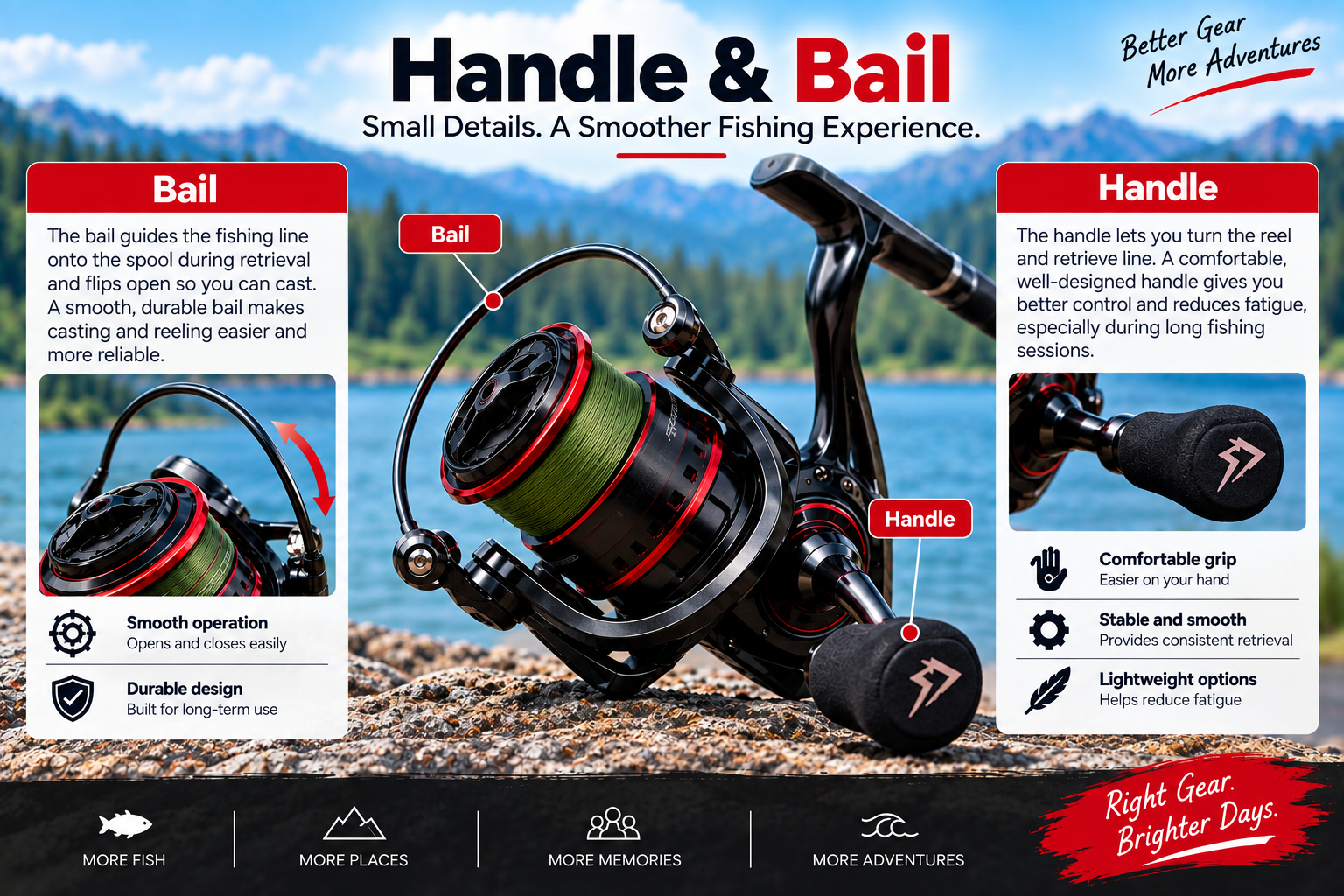
Small design details can make a fishing reel more comfortable and easier to use. On a spinning reel, the bail helps control the line around the spool during casting and retrieval, so it should open and close smoothly and lock securely into place. The handle is another important detail, especially if you spend long periods fishing. It should feel comfortable and easy to grip without causing strain. Some reels also allow the handle to be switched from one side to the other, which can be helpful if you prefer a particular setup or share your equipment with someone else.
Choose the Right Fishing Line
Your choice of reel should also match the type of fishing line you plan to use. The most common options are monofilament, fluorocarbon, and braided line, each with its own characteristics. Monofilament is a popular choice for beginners because it is easy to handle and works well for a wide range of fishing situations. Braided line has a thinner diameter for its strength and very little stretch, making it useful in situations where sensitivity is important. Fluorocarbon is often used as a leader and for specific fishing techniques. Before choosing your line, check the reel’s recommended line capacity to make sure it can hold the amount and type of line you need.
The Best Fishing Reel for a Beginner?
The best fishing reel for a beginner is one that matches the rod, line, lure, and target species while being comfortable and easy to use. For many new anglers, a 2500–3000 size spinning reel with a medium gear ratio is a practical all-purpose choice. It is compact enough for everyday fishing while offering enough versatility for a variety of freshwater techniques. If you mainly target very small fish with ultralight tackle, a 1000–2000 size reel is a better fit. On the other hand, if you plan to target larger fish with heavier tackle, choose a larger reel that matches the requirements of your rod and fishing line.
Beginner Mistakes to Avoid
Beginners often pay too much attention to a reel’s appearance or maximum specifications when choosing their first reel. Instead, focus on how well the reel fits your fishing needs and how comfortable it is to use. Avoid choosing a reel simply because it has the highest gear ratio or maximum drag rating, as these features are only useful when they match your fishing technique. It is also important to make sure the reel is properly matched with your rod rather than pairing them based on appearance alone. A well-matched setup is easier to cast, more comfortable to handle, and better suited to your fishing style. Finally, do not overlook reel size. Understanding spinning reel sizes can make it much easier to narrow down your options and find a reel that fits your needs.
Conclusion
Choosing the right fishing reel becomes much easier when you focus on how you plan to fish rather than simply choosing the most advanced or expensive option. Start by considering your target fish, fishing location, rod, line, and preferred technique. Then use factors such as fishing reel size, reel gear ratio, line capacity, drag, and reel weight to narrow down your choices.
For most beginners, a 2500–3000 size spinning reel is a versatile starting point for general freshwater fishing. Smaller reels suit lighter tackle and smaller fish, while larger reels are better matched with heavier rods, stronger lines, and larger target species.
The most important thing is to create a balanced setup that feels comfortable in your hands and matches your fishing needs. Once you understand how spinning reel size and other key features affect performance, choosing a fishing reel for beginners becomes much simpler. With the right setup, you can spend less time worrying about your equipment and more time enjoying your time on the water.
Discount Stores













 Sign Up & Get $5 Instantly!