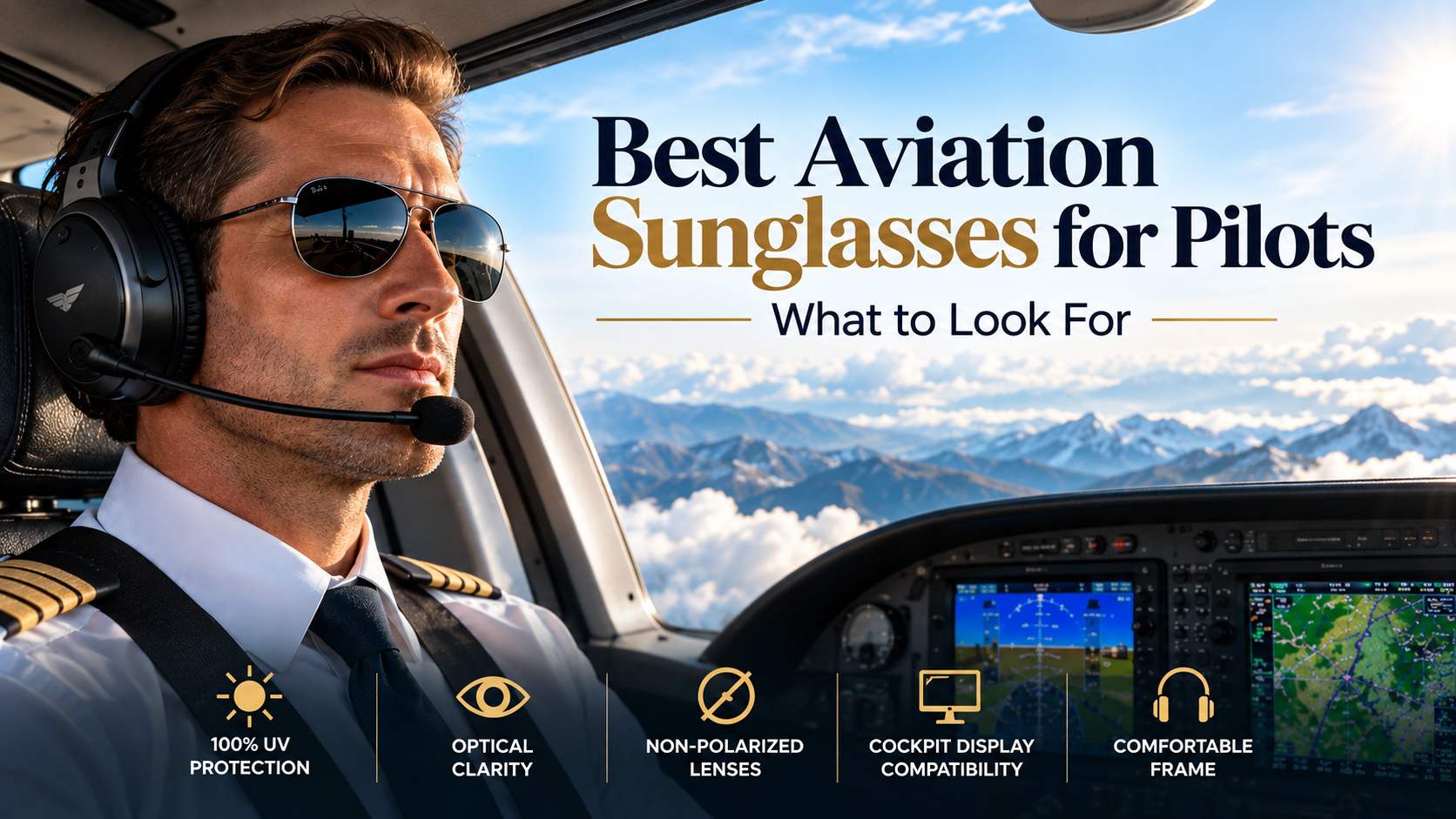
Choosing sunglasses for flying is about more than finding a pair that looks good. Pilots spend long periods dealing with bright sunlight, glare, changing light conditions, and reflections from the aircraft environment. The right sunglasses should help reduce distracting glare while keeping the outside view clear and comfortable.
For pilots, sunglasses for pilots need to work well both inside the cockpit and when looking through the windshield. Lens quality, color, UV protection, frame design, and comfort all matter. Polarisation also deserves special attention because it is not suitable for every cockpit situation.
The best choice depends on the type of aircraft you fly, the conditions you normally encounter, and the equipment inside your cockpit. This guide explains the most important features to consider when choosing aviation sunglasses for pilots.
Sunglasses Matter for Pilots
Sunlight can be intense at altitude, and pilots can experience significant brightness through the windscreen or side windows. Sunglasses reduce the amount of visible light reaching the eyes, making bright conditions more comfortable. Good sunglasses also provide UV protection. The American Academy of Ophthalmology recommends sunglasses that block 99% to 100% of UVA and UVB radiation.
For pilots, however, sunglasses have another important consideration: visual information must remain easy to see. An unnecessarily dark lens that distorts colors, or interferes with cockpit displays is not a good choice simply because it provides strong sun protection.
Look for 100% UV Protection
UV protection should be one of the first things you check when choosing aviation sunglasses for pilots. Look for sunglasses labelled as providing 100% UVA and UVB protection or UV400 protection. The darkness of a lens does not determine how much UV protection it provides. A dark lens without adequate UV protection is not an appropriate substitute for proper UV-blocking lenses.
UV protection is particularly important during flying because exposure to ultraviolet radiation increases with altitude. When comparing sunglasses, verify the manufacturer's UV protection specifications rather than judging protection by lens appearance.
Suitable Lens Color and Darkness
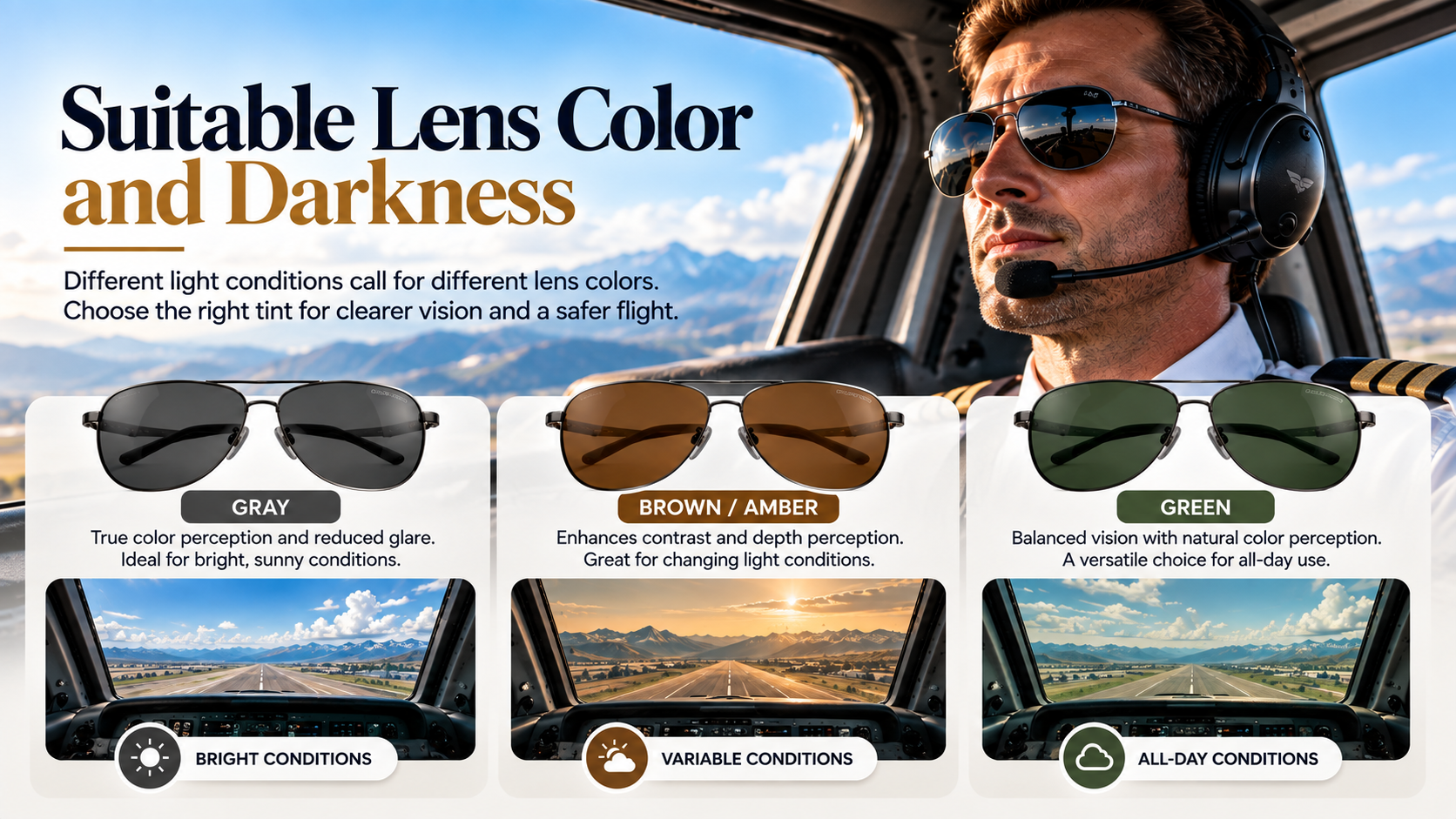
Lens color can change how you see the world through your sunglasses, so it is an important consideration for pilots. Gray lenses are a popular choice because they reduce brightness while keeping colors looking fairly natural, making them suitable for general daytime flying.
Brown or amber lenses can improve contrast and make certain details stand out, although they also give the view a warmer color tint. Green lenses offer another option, helping reduce brightness while maintaining relatively natural color perception.
When choosing sunglasses for pilots, however, the darkest lens is not necessarily the best one. A lens that is too dark can make shaded areas, cockpit instruments, and displays harder to see, especially when moving between bright and darker environments.
The ideal tint should provide comfortable light reduction while preserving clear visual detail. In other words, good pilot sunglasses are about finding the right balance between glare protection, brightness, and visibility rather than simply choosing the darkest lenses available.
Non-Polarised Sunglasses for Pilots
One important thing to consider when choosing non-polarised sunglasses for pilots is how the lenses work with cockpit displays. Polarised lenses are designed to reduce reflected glare, which makes them useful in everyday situations such as driving or being around water.
However, they can sometimes make LCD and other digital screens appear darker or harder to read from certain angles. Since modern aircraft often use electronic displays, pilots need to think about screen visibility when choosing their sunglasses.
This is why non-polarised sunglasses for pilots can be a practical option for cockpit use, as they reduce brightness without introducing the same polarisation effect that can interfere with some screens. If you regularly fly an aircraft with electronic displays, check your sunglasses with those screens before using them during flight to make sure the information remains clear and easy to read.
Consider Lens Quality and Optical Clarity
Optical clarity is especially important in aviation. Pilots need to identify aircraft, terrain, runway markings, instruments, and other visual information accurately. Look for lenses that provide a clear, consistent view across the lens. Poor-quality lenses can introduce distortion that becomes distracting during long periods of use.
Scratch-resistant lens materials are also useful because scratches can create additional glare and reduce visual clarity. Keeping the lenses clean is equally important. Fingerprints, dust, and smudges can become particularly noticeable when sunlight enters the cockpit. A quality pair of cockpit sunglasses should help you see comfortably rather than becoming another distraction.
Choose a Comfortable Frame
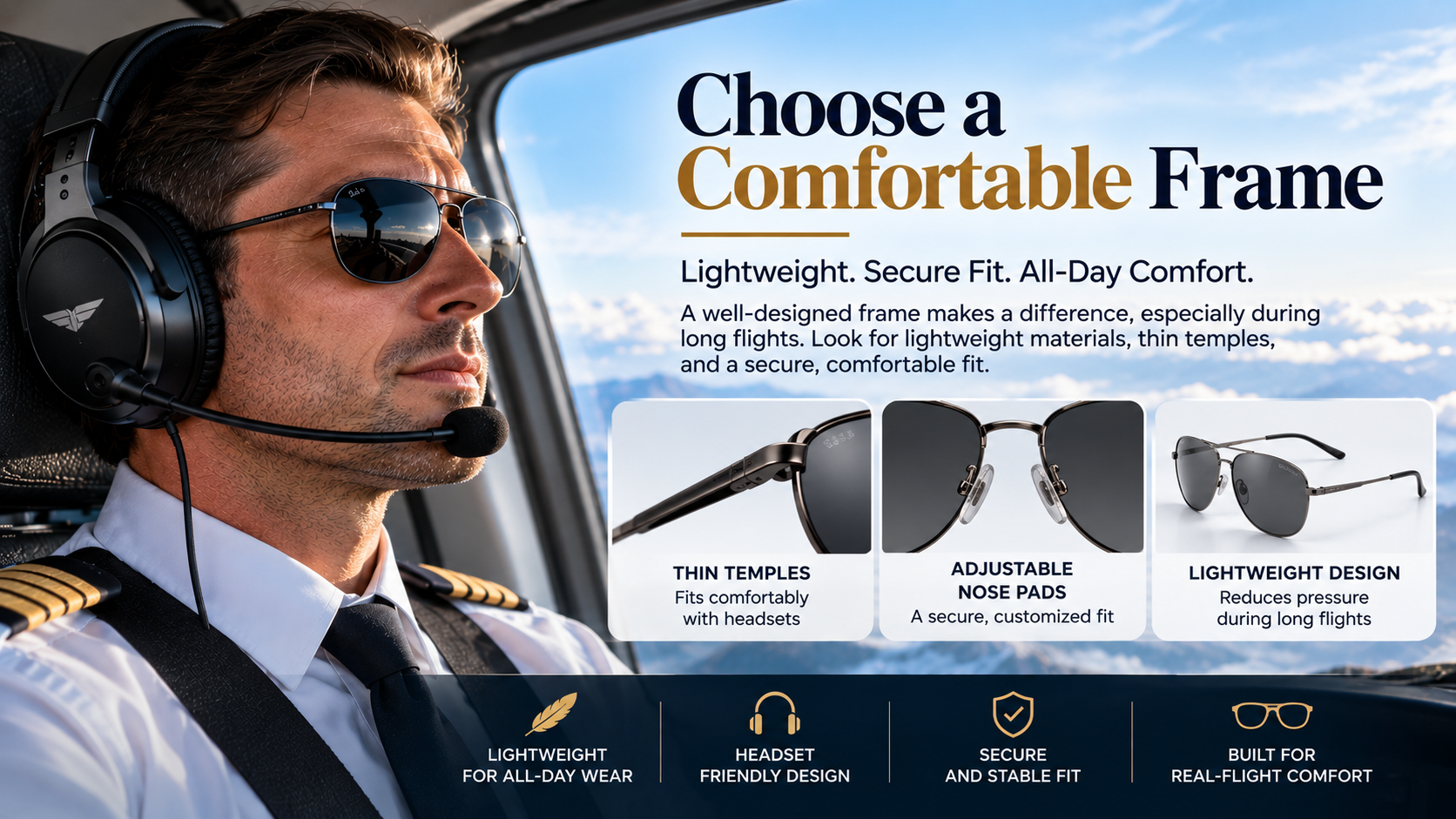
A good pair of sunglasses should stay comfortable throughout the entire flight. Look for a frame that fits securely without putting too much pressure on your face, stays in place without sliding down your nose, and does not interfere with your headset.
The frame should also feel comfortable around your ears, provide a clear field of view, and fit easily with the aviation equipment you use. Headsets can affect how sunglasses feel because the frame arms sit between your head and the headset cushions.
Thin, low-profile temples can help reduce pressure in this area and make the sunglasses more comfortable to wear. This becomes especially important during long flights, when even a small pressure point can become distracting and uncomfortable over time.
Pay Attention to Frame Design
The frame should fit securely without creating pressure around your nose, ears, or temples. A comfortable fit becomes increasingly important during long flights.
Large frames can provide greater coverage from light entering around the sides, while slimmer designs can feel less intrusive. The best option is one that stays securely in position without interfering with your headset.
This is particularly important for pilots who wear aviation headsets. Thick temples or poorly positioned frames can create pressure between the headset and the sides of the head. A lightweight frame can also make sunglasses more comfortable during extended use.
Avoid Excessively Thick Frames
A thick frame can limit peripheral vision and become uncomfortable when worn with a headset. Since pilots regularly scan both the instruments and the outside environment, sunglasses should provide a wide, unobstructed field of view. A relatively thin frame paired with lenses that offer enough coverage can be a practical choice for aviation.
The frame should also fit securely and stay in place when you turn your head, move around the cockpit, or adjust your headset, so your vision remains clear and you are not constantly repositioning your sunglasses.
Check Compatibility With Cockpit Displays
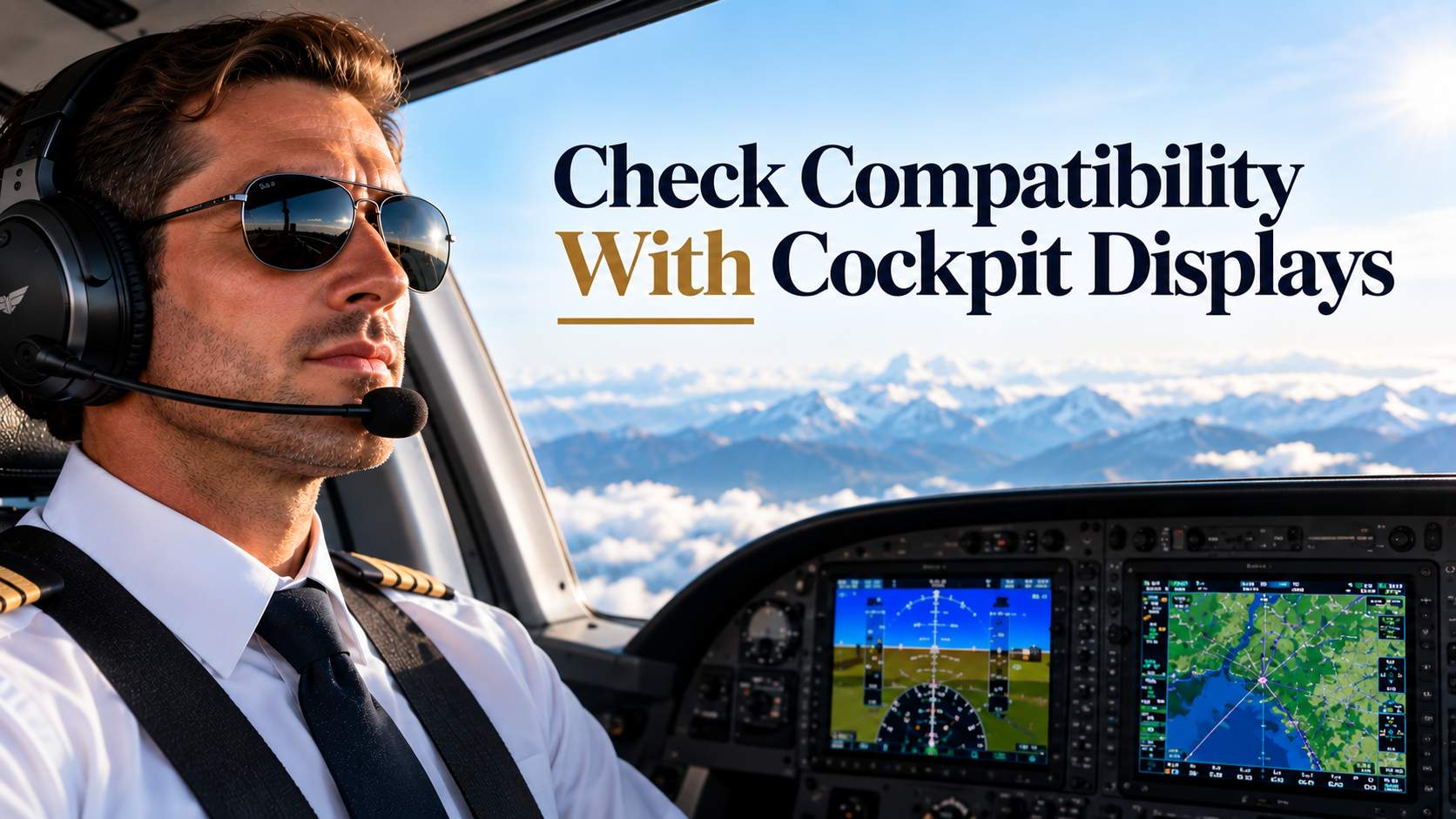
Before choosing sunglasses for pilots, think about the aircraft you actually fly and the displays you use during a flight. Modern cockpits can include several digital screens, navigation displays, engine monitoring systems, and other electronic instruments, and polarised lenses can affect different displays in different ways.
If you are buying sunglasses specifically for aviation, test them in the cockpit whenever possible. Check the primary flight display, navigation and multifunction screens, electronic flight instruments, and any mobile devices or tablets you use for flight operations.
The important thing is to make sure every essential screen remains clear and easy to read. If your sunglasses make an important display difficult to see, choose a different lens that provides better visibility.
Consider the Cockpit Environment
The aircraft itself should influence your sunglasses choice. Different cockpit designs produce different lighting conditions. Windshields and side windows can create reflections, while instrument panels and electronic displays can introduce additional considerations. A pilot flying a modern glass cockpit should pay particular attention to screen visibility.
Think about the equipment you use regularly. If you rely heavily on digital displays, test your sunglasses with those screens before flying with them. For pilots who use paper charts, tablets, phones, or other devices, sunglasses should also allow important information to remain easy to read.
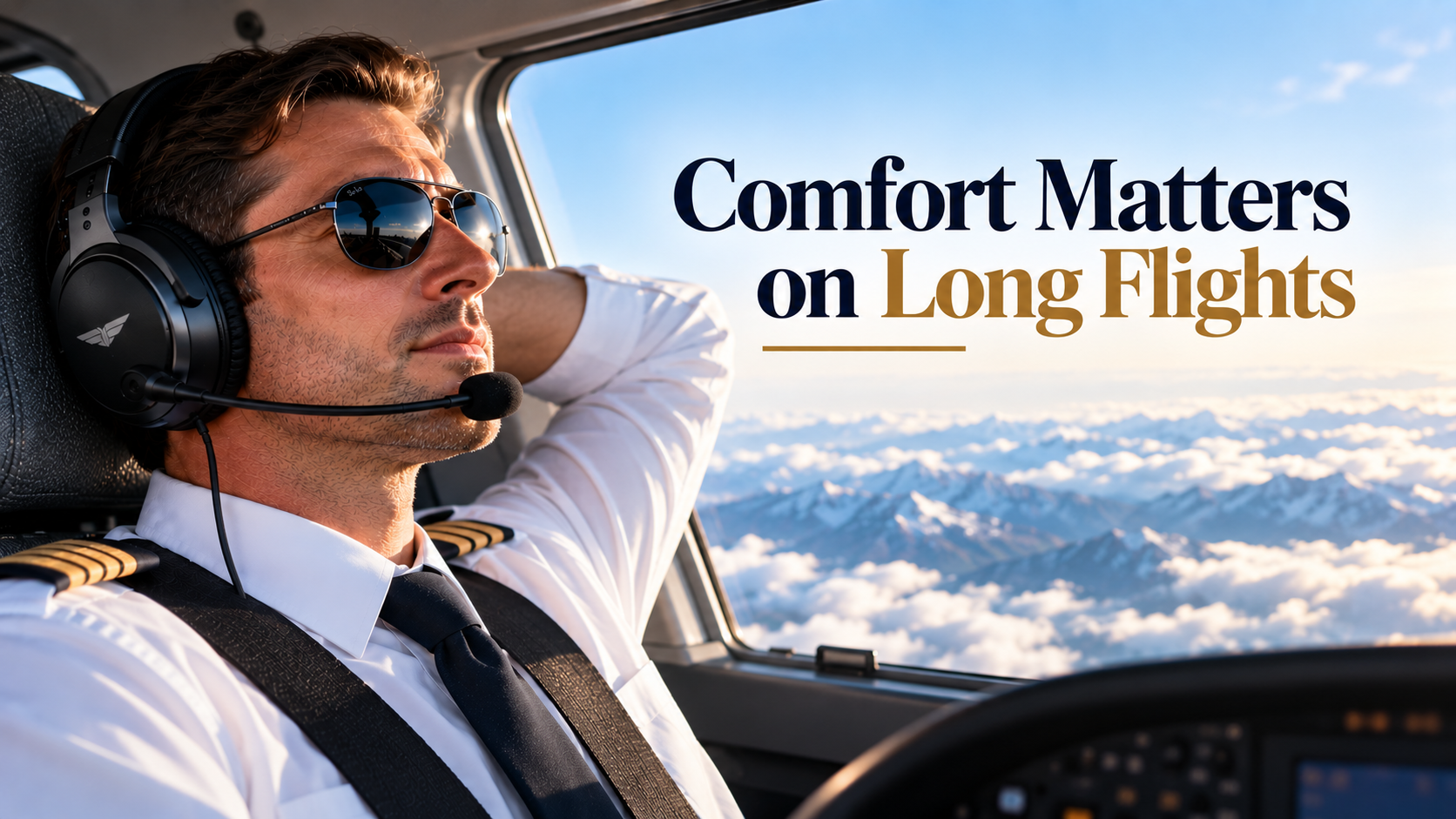
Comfort Matters on Long Flights
Even excellent lenses are not useful if the sunglasses become uncomfortable after an hour or two. Look for a secure fit, comfortable nose pads, lightweight construction, and frames that work well with your headset. The sunglasses should stay in place when you move your head without requiring constant adjustment.
A comfortable pair is easier to wear consistently throughout a flight. It is also worth keeping your sunglasses in a protective case when they are not being used. This helps prevent scratches and keeps the lenses clean.
What Makes the Best Sunglasses for Pilots?
The best sunglasses for pilots combine clear optics, reliable UV protection, an appropriate lens tint, comfortable fit, and good cockpit compatibility. There is no single frame design that suits every pilot. Instead of choosing sunglasses based on appearance or darkness alone, consider how well they perform in the environment where you actually fly.
For many pilots, gray or other neutral-tinted lenses provide a practical starting point because they reduce brightness while preserving a relatively natural view. Non-polarised lenses are also worth considering when cockpit display compatibility is important. Most importantly, choose sunglasses that allow you to see comfortably and clearly without interfering with your aircraft's instruments or electronic displays.
Common Mistakes to Avoid
One common mistake is choosing sunglasses based entirely on appearance. Stylish sunglasses are not automatically suitable for aviation. Another mistake is assuming darker lenses provide better protection. UV protection and lens darkness are different characteristics.
Pilots should also avoid buying sunglasses without checking whether they interfere with cockpit displays. Polarised lenses deserve particular attention because of their interaction with some LCD screens. Finally, do not overlook comfort. Sunglasses that create pressure under an aviation headset can become irritating during a long flight.
Conclusion
Choosing the right sunglasses for pilots is about finding the right balance between eye protection, clear vision, comfort, and cockpit compatibility. Look for reliable UV protection, clear optical quality, a suitable lens tint, and a frame that fits comfortably with your aviation headset.
For many pilots, gray or other neutral-tinted lenses are a practical choice for reducing brightness while keeping colors relatively natural. Non-polarised sunglasses for pilots are also worth considering when electronic cockpit displays are part of your normal flying environment. Most importantly, test your sunglasses with the instruments and screens you actually use and make sure they remain easy to read.
The best aviation sunglasses for pilots are not simply the darkest or most stylish pair. They are the ones that protect your eyes, stay comfortable during long flights, and let you maintain a clear view of both the cockpit and the outside environment.
Discount Stores













 Sign Up & Get $5 Instantly!